
 EN


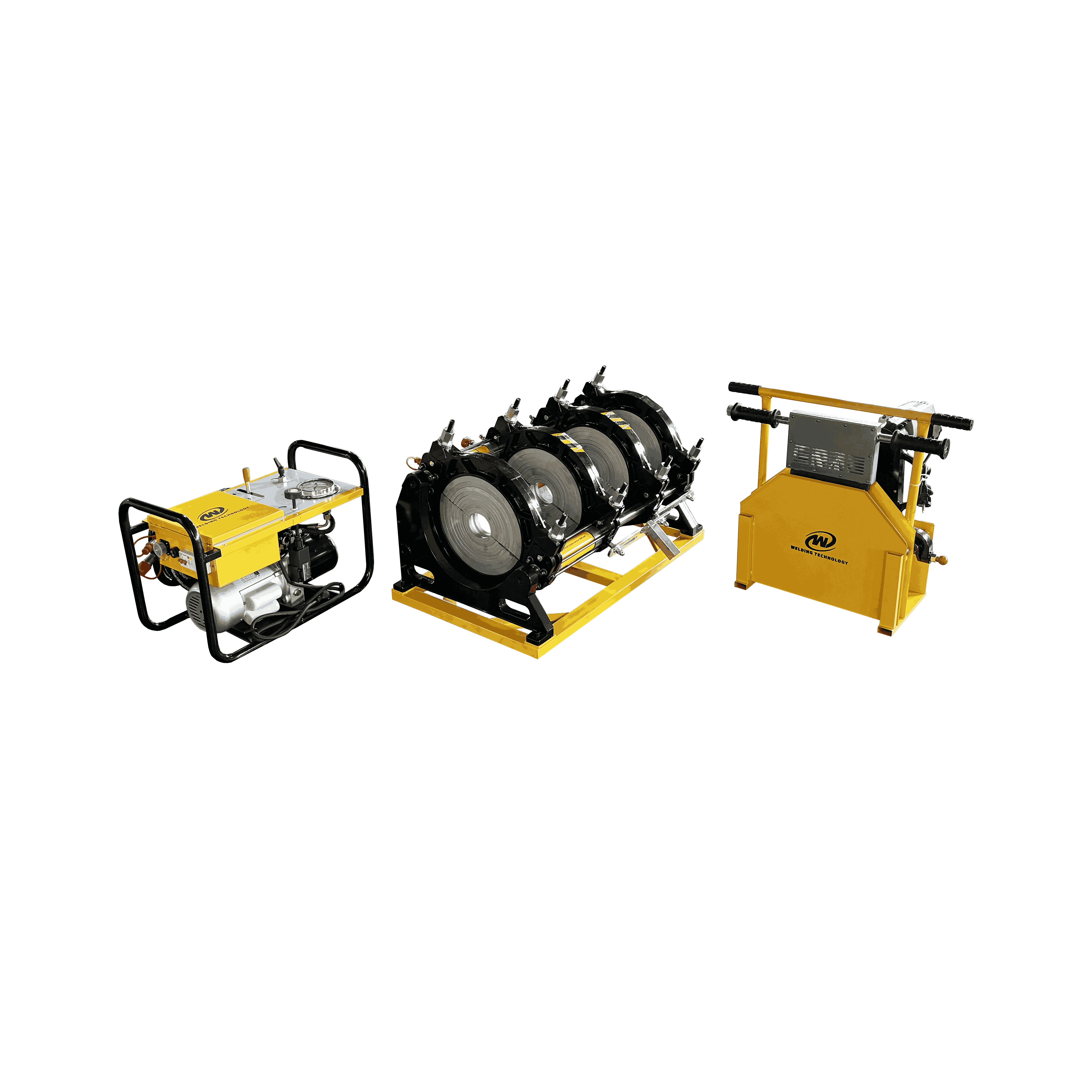
Product durability is a critical factor in industrial manufacturing, directly impacting customer satisfaction, warranty costs, and brand reputation. Many manufacturers struggle with plastic component failures due to inadequate joining methods that compromise structural integrity over time. A plastic welding machine addresses this challenge by creating permanent molecular bonds that far exceed traditional joining techniques. Understanding how a plastic welding machine improves product durability can help you make informed decisions about your manufacturing processes and equipment investments.
The engineering behind a plastic welding machine centers on creating molecular-level connections that restore the original material properties at joint locations. Unlike mechanical fasteners or adhesives that weaken over time, a plastic welding machine fuses plastic materials at controlled temperatures and pressures, producing joints that are often as strong as the base material itself. This fundamental advantage transforms how manufacturers approach product design, allowing them to create more reliable, longer-lasting plastic assemblies across diverse industries including automotive, infrastructure, pharmaceutical, and consumer goods sectors.
How a Plastic Welding Machine Creates Superior Joint Strength
Molecular Fusion and Material Integrity
A plastic welding machine operates by heating plastic materials to their melting point and applying controlled pressure to fuse them together. During this process, polymer chains intermix at the joint interface, creating a molecular bond that becomes part of the continuous material matrix. This fusion mechanism is fundamentally different from mechanical joining, where fasteners merely hold materials together without restoring material continuity. When a plastic welding machine completes a weld cycle, the resulting joint possesses structural characteristics comparable to the original plastic, ensuring consistent load distribution and stress resistance throughout the assembly.
The strength of a plastic welding machine joint depends on precise temperature control, adequate heating duration, and appropriate pressure application. If these parameters are optimized for the specific plastic material being joined, a plastic welding machine produces joints that can withstand tensile, compressive, and shear forces equal to or exceeding the base material's capabilities. This molecular-level integration means that stress cannot concentrate at the joint interface, unlike welded steel or bolted assemblies where fatigue cracks often initiate. Manufacturers using a plastic welding machine consistently report that welded joints outlast the surrounding plastic material under demanding application conditions.
Elimination of Stress Concentration Points
Traditional joining methods introduce geometric stress risers that accelerate material fatigue and failure under cyclic loading. Mechanical fasteners create holes that reduce cross-sectional area and concentrate stress around the fastener hole. Adhesive joints create weak interface layers prone to delamination and environmental degradation. In contrast, a plastic welding machine eliminates these vulnerabilities by creating smooth, continuous joint surfaces with minimal stress concentration. The weld profile can be optimized through bead design and material management, distributing loads evenly across the joint region and extending component service life significantly.
When a plastic welding machine operates in controlled industrial environments, the resulting joints maintain consistent strength properties throughout the product lifecycle. Engineers can rely on a plastic welding machine welds to maintain their strength under thermal cycling, chemical exposure, and mechanical stress without degradation mechanisms that compromise traditional fastened or adhesively bonded joints. This predictability allows designers to specify lighter wall thicknesses and smaller material volumes while maintaining required safety factors, reducing material consumption and manufacturing costs without sacrificing durability.
Environmental Resistance and Long-Term Performance
Protection Against Chemical and Thermal Degradation
Product durability depends not only on initial strength but also on resistance to environmental factors that degrade plastics over extended use. A plastic welding machine creates joints with environmental resistance that matches the base material because no foreign substances are introduced into the joint. Adhesive-based joints absorb moisture, swell, and weaken over time, particularly in humid industrial environments. Bolted assemblies allow moisture ingress between mating surfaces, promoting corrosion and material degradation. A plastic welding machine eliminates these pathways by creating sealed, continuous material joints that resist environmental attack.
The integrity of a plastic welding machine joint remains stable across wide temperature ranges, critical for applications involving thermal cycling. In cryogenic applications, welded joints maintain their flexibility and impact resistance where adhesive or mechanical joints become brittle and fail. In high-temperature service, a plastic welding machine joints resist softening and stress relaxation better than alternative joining methods. Industrial manufacturers in pharmaceutical, food processing, and chemical handling rely on a plastic welding machine to ensure that plastic assemblies remain watertight, chemically inert, and structurally sound throughout their operational life.
Reduced Maintenance and Failure-Related Downtime
Equipment failures due to joint separation or fatigue crack propagation create costly production interruptions and warranty claims. A plastic welding machine substantially reduces these risks by producing joints with predictable, consistent performance characteristics. Plant managers report that products manufactured with a plastic welding machine experience significantly lower field failure rates compared to traditionally joined alternatives. The reduction in unexpected failures translates directly into decreased warranty costs, improved customer satisfaction, and enhanced brand reputation in competitive markets where product reliability differentiates manufacturers from competitors.
Preventive maintenance strategies become more effective when products utilize joints created by a plastic welding machine. Because welded joints degrade predictably following well-established material science principles, maintenance schedules can be based on objective technical data rather than empirical failure rates. This predictability allows manufacturers to implement condition-based maintenance programs that replace components before sudden failure occurs, eliminating catastrophic failures and extending overall system availability and productivity.
Manufacturing Efficiency and Cost Durability Benefits
Process Consistency and Quality Assurance
A plastic welding machine controlled by modern automation systems delivers consistent, repeatable weld quality that surpasses manual joining methods. Automated temperature control, pressure profiling, and cooling sequences ensure that every plastic welding machine cycle produces identical joint characteristics. This consistency reduces statistical variation in product performance, eliminating weak assemblies that would fail prematurely in the field. Statistical process control becomes practical when a plastic welding machine parameters are digitally monitored and logged, creating quality data that manufacturers can use to document compliance with industry standards and customer specifications.
Quality engineers appreciate that a plastic welding machine eliminates operator-dependent variables that plague manual adhesive application or mechanical fastening processes. Training requirements are simplified because equipment operation requires minimal human judgment once process parameters are established. A plastic welding machine provides real-time feedback about joint quality through pressure monitoring, temperature verification, and cycle time measurement, enabling immediate detection of process drift before defective products are produced. This proactive quality management directly translates into higher product durability and reduced field failures.
Design Flexibility and Assembly Optimization
A plastic welding machine enables design innovations that improve product durability beyond what traditional joining methods allow. Designers can specify thinner-wall sections in non-critical areas and reinforce stress concentration regions with localized material additions, optimizing material distribution for durability performance. Complex three-dimensional assemblies become feasible because a plastic welding machine can access joint areas that mechanical fasteners cannot reach. Internal ribs, bosses, and reinforcing structures can be integrated into molded components and then welded together, creating assemblies with superior durability characteristics compared to traditional design approaches.
Manufacturing engineers benefit from simplified assembly workflows when a plastic welding machine replaces multi-step fastening or adhesive application processes. Single-station welding operations consolidate assembly steps, reducing handling time and minimizing opportunities for contamination or positioning errors. This process simplification improves throughput and reduces labor costs while simultaneously improving product durability through better process control. The economic benefits of a plastic welding machine combine with durability improvements, creating compelling business cases for process modernization in high-volume plastic component manufacturing.
FAQ
What specific plastic materials can be joined using a plastic welding machine?
A plastic welding machine can join thermoplastic materials including polyethylene (PE), polypropylene (PP), polyvinyl chloride (PVC), polyethylene terephthalate (PET), and engineering plastics like nylon and acetal. Each material requires specific temperature and pressure parameters that a plastic welding machine operators must calibrate based on material specifications. Thermoset plastics and materials with low melting points present challenges, but modern a plastic welding machine can accommodate a wide range of thermoplastic compositions used in industrial applications. Material compatibility and process optimization are essential considerations when selecting a plastic welding machine for specific manufacturing applications.
How does a plastic welding machine compare to adhesive bonding for long-term durability?
A plastic welding machine creates superior long-term durability compared to adhesive bonding because welded joints maintain their strength without degradation from moisture absorption, chemical exposure, or thermal cycling. Adhesive joints typically degrade within five to ten years in demanding industrial environments, while a plastic welding machine joints remain stable for decades when the base material itself remains serviceable. The molecular fusion created by a plastic welding machine provides inherent durability advantages that adhesive layers cannot match, making welding the preferred choice for applications requiring extended service life and environmental resistance. For critical applications where durability failures create safety risks or substantial economic losses, a plastic welding machine offers reliability that adhesive bonding cannot guarantee.
Can a plastic welding machine improve durability in temperature-cycling applications?
A plastic welding machine excels in temperature-cycling applications because welded joints expand and contract in synchronization with the base material, maintaining stress-free joint operation across wide temperature ranges. Mechanical fasteners and adhesives create thermal mismatch stresses when different materials with different expansion coefficients experience temperature changes. A plastic welding machine eliminates thermal mismatch by ensuring that the joint material possesses identical thermal properties as the surrounding plastic. Applications involving repeated freeze-thaw cycling, thermal shock, or sustained temperature variation benefit substantially from a plastic welding machine because joint durability remains reliable where alternative joining methods fail prematurely due to thermal stress accumulation.