
 EN
EN


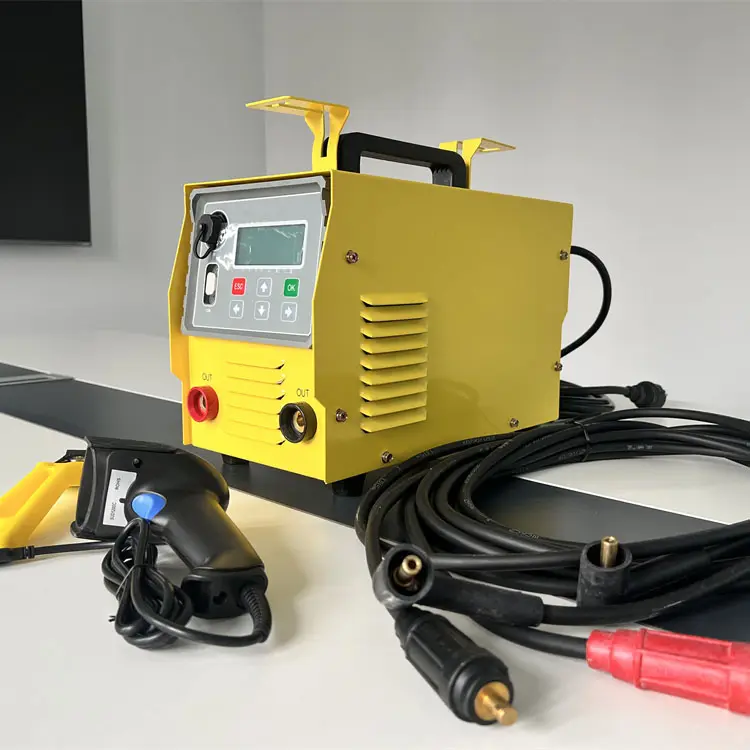
In industrial piping systems, the integrity of connections directly determines operational safety, longevity, and performance. Traditional mechanical joining methods such as threading, clamping, or adhesive bonding often introduce vulnerabilities including stress concentration points, chemical degradation zones, and limited resistance to thermal cycling. The plastic pipe electric fusion welder addresses these fundamental weaknesses by creating homogeneous molecular bonds between pipe segments and specially designed fittings. This advanced welding technology eliminates the weak interfaces inherent in mechanical connections, producing joints that frequently exceed the tensile strength of the parent pipe material itself. Understanding the precise mechanisms through which electric fusion welding enhances connection strength enables engineers and project managers to specify optimal joining solutions for critical applications ranging from municipal water distribution to industrial chemical transfer systems.
Electric fusion welding represents a paradigm shift from purely mechanical force-based connections to thermochemical molecular bonding. Unlike compression fittings that rely on gasket deformation or threaded joints that concentrate stress at engagement points, a plastic pipe electric fusion welder initiates controlled polymer chain entanglement at the molecular level. The embedded heating coil within the electrofusion fitting generates precisely regulated thermal energy that simultaneously melts both the fitting's inner surface and the pipe's outer surface, creating a molten interface zone where polymer chains interdiffuse across the original boundary. Upon cooling, this interdiffusion zone solidifies into a unified structure where the distinction between pipe and fitting becomes indiscernible at the molecular scale, effectively eliminating the structural discontinuity that defines mechanical joint vulnerability.
The Molecular Foundation of Enhanced Joint Strength
Polymer Chain Interdiffusion Mechanics
The fundamental strength advantage provided by a plastic pipe electric fusion welder originates in the physics of polymer chain entanglement during the fusion process. Polyethylene and polypropylene piping materials consist of long-chain hydrocarbon molecules with molecular weights typically ranging from fifty thousand to several hundred thousand atomic mass units. At room temperature, these chains exist in semi-crystalline arrangements with limited mobility. When the plastic pipe electric fusion welder raises the interface temperature to the melting point, typically between one hundred thirty and two hundred degrees Celsius depending on the polymer grade, the crystalline regions dissolve and polymer chains gain sufficient kinetic energy to migrate across the original pipe-fitting boundary.
During the critical fusion window maintained by the plastic pipe electric fusion welder, polymer chains from both surfaces interpenetrate to depths of tens to hundreds of micrometers, creating what materials scientists term an interphase region. This interphase exhibits a gradient structure where polymer chain density and entanglement progressively transition from pure pipe material composition to pure fitting material composition. The extent of chain interdiffusion directly correlates with final joint strength, making precise thermal control the essential function that differentiates high-quality electric fusion equipment from inadequate alternatives. Research utilizing advanced microscopy techniques has demonstrated that properly executed electrofusion joints achieve chain interdiffusion densities approaching eighty to ninety percent of the bulk material, explaining why these joints routinely withstand stress levels exceeding those required to rupture the adjacent pipe wall.
Crystalline Structure Reformation During Cooling
The cooling phase following the active heating cycle of a plastic pipe electric fusion welder proves equally critical to ultimate connection strength. As the molten polymer interface loses thermal energy, polymer chains begin reorganizing into crystalline lamellae structures that provide mechanical strength to thermoplastic materials. The cooling rate directly influences crystalline morphology, with controlled cooling promoting the formation of larger, more perfect crystalline domains that enhance tensile strength and impact resistance. Advanced plastic pipe electric fusion welder systems incorporate cooling cycle management that prevents excessively rapid thermal dissipation, which would generate high internal stresses and smaller, less perfect crystalline structures.
The reformation of crystalline structures across the fusion interface creates a continuous load-bearing network without the abrupt material property discontinuities characteristic of mechanical joints. In compression fittings, the transition from metal or rigid plastic fitting to flexible pipe material creates a stress concentration zone where material property mismatches amplify applied forces. The plastic pipe electric fusion welder eliminates this vulnerability by producing joints where crystalline lamellae bridge continuously across the original interface, distributing applied loads uniformly throughout the joint region. This structural continuity explains the superior fatigue resistance of electrofusion joints in applications subject to pressure cycling, thermal expansion cycles, or mechanical vibration.
Geometric and Structural Advantages of Electrofusion Joints
Elimination of Stress Concentration Points
Mechanical joining methods inevitably introduce geometric discontinuities that concentrate applied stresses into localized regions. Threaded connections create stress risers at thread roots where crack initiation readily occurs under cyclic loading. Compression fittings generate stress concentrations at gasket edges and at the transition between compressed and uncompressed pipe sections. The plastic pipe electric fusion welder produces joints with smooth, continuous internal and external geometries that distribute applied stresses uniformly across the entire joint length. The absence of geometric stress concentrators dramatically improves resistance to both static overload and fatigue failure under cyclic loading conditions.
Finite element analysis of electrofusion joints reveals remarkably uniform stress distributions under internal pressure loading, with peak stress values typically remaining within ten to fifteen percent of the nominal hoop stress in the adjacent pipe wall. In contrast, threaded and compression fittings commonly exhibit peak stresses two to three times higher than nominal values, concentrated in small regions vulnerable to progressive damage accumulation. The geometric uniformity achieved by a plastic pipe electric fusion welder extends this benefit to external loading scenarios as well, including soil settlement effects in buried pipelines and support point reactions in above-ground installations. This comprehensive stress distribution optimization represents a fundamental advantage that mechanical joining methods cannot replicate regardless of design refinement.
Optimized Load Transfer Path Configuration
The load transfer mechanism in electrofusion joints fundamentally differs from mechanical alternatives in ways that enhance connection strength under diverse loading scenarios. Mechanical joints transfer loads through discrete contact zones, friction interfaces, or thread engagement surfaces, creating load paths with inherent inefficiencies and vulnerability points. A plastic pipe electric fusion welder creates a monolithic structure where loads transfer through continuous material volume rather than through discrete interfaces. This volumetric load transfer distributes applied forces across the entire fusion zone, engaging substantially greater material cross-sectional area in resisting applied loads.
The extended engagement length characteristic of electrofusion couplers and fittings further amplifies this structural advantage. While compression fittings typically engage pipe outer surfaces over lengths of twenty to forty millimeters, electrofusion couplers commonly provide fusion zone lengths of one hundred to two hundred millimeters or more, depending on pipe diameter. This extended engagement length, combined with the continuous molecular bonding produced by the plastic pipe electric fusion welder, creates load transfer paths with substantially reduced shear stress magnitudes. For a given applied tensile load, increasing engagement length proportionally reduces interfacial shear stress, explaining why properly executed electrofusion joints routinely achieve pull-out resistances exceeding pipe material yield strength.
Thermal Control Precision and Joint Quality Correlation
Temperature Profile Management Throughout the Fusion Cycle
The quality of joints produced by a plastic pipe electric fusion welder depends critically on maintaining precise thermal profiles throughout the fusion cycle. Insufficient heating fails to achieve adequate polymer melting and chain mobility, resulting in incomplete interdiffusion and weak interfacial bonding. Excessive heating causes polymer degradation, generates excessive melt flow that creates voids, and produces residual stresses during cooling. Modern plastic pipe electric fusion welder equipment incorporates microprocessor-controlled power delivery systems that regulate heating coil temperature within narrow tolerances, typically maintaining target temperatures within five degrees Celsius throughout the fusion cycle.
The heating profile must accommodate the thermal mass of both the fitting and the pipe, which varies substantially with diameter, wall thickness, and ambient temperature conditions. Sophisticated plastic pipe electric fusion welder systems employ adaptive control algorithms that adjust heating duration and power levels based on fitting identification data encoded in barcode or RFID tags embedded in each fitting. This automated parameter optimization ensures consistent joint quality across varying pipe sizes and environmental conditions, eliminating the operator judgment variability that compromises consistency in manual joining methods. Field studies comparing joints produced under diverse ambient conditions demonstrate that properly controlled electric fusion welding maintains joint strength coefficients above ninety-five percent of laboratory optimum values, while mechanical joining quality varies substantially with temperature, humidity, and operator technique.
Cooling Rate Management and Residual Stress Minimization
The cooling phase following active heating in a plastic pipe electric fusion welder significantly influences final joint quality through its effects on crystalline structure formation and residual stress development. Excessively rapid cooling generates thermal gradients that create differential contraction between the fusion zone and adjacent pipe material, inducing residual tensile stresses that reduce effective joint strength. Conversely, excessively slow cooling extends cycle time and may allow excessive melt flow that creates voids or geometrical irregularities. Optimal cooling protocols balance these competing considerations to maximize joint strength while maintaining practical installation productivity.
Advanced plastic pipe electric fusion welder systems incorporate forced cooling management that begins immediately upon completion of the heating cycle. This controlled cooling phase maintains the joint assembly in fixed alignment while managing thermal dissipation rates through algorithmic power delivery that gradually reduces heating coil temperature rather than abruptly terminating power. This gradual thermal ramp-down minimizes thermal shock effects and promotes uniform crystalline structure formation throughout the fusion zone. Comparative testing demonstrates that joints produced with optimized cooling protocols exhibit tensile strengths five to ten percent higher than joints subjected to uncontrolled ambient cooling, with particularly pronounced improvements in impact resistance and fatigue life.
Performance Under Challenging Service Conditions
Pressure Cycling and Fatigue Resistance
Pipeline systems in municipal water distribution, industrial process applications, and gas transmission service experience continuous pressure fluctuations that subject joints to cyclic stress loading. This fatigue loading environment represents the most demanding test of connection strength, as cumulative damage accumulation progressively degrades joint integrity even when peak stress levels remain well below static failure thresholds. The homogeneous structure produced by a plastic pipe electric fusion welder provides exceptional fatigue resistance because it eliminates the stress concentration points and material discontinuities where fatigue cracks preferentially initiate in mechanical joints.
Accelerated fatigue testing protocols subject electrofusion joints to millions of pressure cycles between minimum and maximum design pressures, simulating decades of field service in compressed timeframes. Test results consistently demonstrate that properly executed electrofusion joints exhibit fatigue lives exceeding those of adjacent pipe material, with failure modes involving pipe wall rupture distant from the joint rather than joint separation. This performance stands in marked contrast to threaded and compression joints, which commonly exhibit progressive degradation at thread roots or gasket interfaces, ultimately failing at cycle counts substantially below pipe material fatigue limits. The superior fatigue performance of joints created with a plastic pipe electric fusion welder translates directly to extended service life in applications where pressure cycling represents the dominant failure mechanism.
Thermal Expansion Cycle Accommodation
Temperature variations in service environments cause thermoplastic piping materials to undergo substantial dimensional changes through thermal expansion and contraction. These dimensional changes generate mechanical stresses at joints, particularly in constrained installations where free thermal movement is restricted. The monolithic structure created by a plastic pipe electric fusion welder accommodates thermal cycling without developing progressive damage because expansion-induced stresses distribute uniformly throughout the joint rather than concentrating at discrete interfaces. This stress distribution eliminates the progressive loosening and seal degradation that plague mechanical joints subjected to repeated thermal cycling.
Long-term thermal cycling testing exposes electrofusion joints to temperature ranges spanning from subfreezing conditions to elevated service temperatures approaching material softening points. These tests simulate extreme seasonal temperature variations and process temperature fluctuations over thousands of cycles. Post-test examination and pressure testing of specimens consistently reveal that plastic pipe electric fusion welder joints maintain original strength and leak-tight integrity, while mechanical joints exhibit measurable degradation including reduced pull-out resistance, increased leak rates, and visible gaps at sealing interfaces. This performance advantage proves particularly valuable in above-ground installations and applications involving hot or cold process fluids where thermal cycling intensity exceeds that experienced in buried ambient-temperature water distribution systems.
Quality Assurance and Joint Strength Verification
Process Documentation and Traceability Systems
Modern plastic pipe electric fusion welder equipment incorporates comprehensive data logging capabilities that record all critical fusion parameters for each joint produced. These systems capture heating voltage, current, duration, ambient temperature, fitting identification data, and operator credentials, creating permanent records that enable complete joint traceability. This documentation capability serves dual purposes: immediate verification that fusion parameters remained within specified ranges, and long-term forensic capability if joint performance questions arise during service life. The availability of complete fusion records provides quality assurance confidence unattainable with mechanical joining methods where joint quality depends entirely on operator technique and visual inspection.
The traceability enabled by advanced plastic pipe electric fusion welder systems extends beyond individual joint records to encompass trend analysis across entire projects. Statistical analysis of fusion parameter data reveals systematic variations that might indicate equipment calibration drift, environmental condition effects, or operator training needs before these factors compromise joint quality. This predictive quality management capability transforms joint quality assurance from reactive inspection to proactive process control, fundamentally improving reliability in critical installations. Project specifications for high-consequence applications increasingly mandate comprehensive data logging and traceability as standard requirements, recognizing that documented process control provides stronger quality assurance than destructive sample testing of a small percentage of completed joints.
Non-Destructive Evaluation Techniques
While the comprehensive process documentation provided by modern plastic pipe electric fusion welder equipment offers strong quality assurance, certain critical applications benefit from supplementary non-destructive evaluation of completed joints. Visual inspection protocols examine external joint appearance for indicators of process defects including excessive melt bead geometry, surface irregularities, or contamination evidence. These visual indicators, while indirect, provide rapid screening capability to identify joints potentially requiring additional evaluation. More sophisticated non-destructive techniques including ultrasonic inspection and radiographic examination enable direct evaluation of fusion zone integrity, detecting voids, incomplete fusion, or contamination that might not produce visible external indicators.
The relationship between fusion process parameters recorded by the plastic pipe electric fusion welder and actual joint quality as revealed by non-destructive evaluation has been extensively characterized through research correlating process data with destructive test results. This research demonstrates that joints produced within specified parameter ranges consistently achieve quality standards, while parameter deviations reliably predict quality deficiencies. This validated correlation enables quality assurance protocols that combine comprehensive process documentation with risk-based non-destructive evaluation, focusing detailed inspection resources on joints where process records indicate potential concerns while accepting process documentation as sufficient verification for joints with nominal parameters.
FAQ
What specific temperature does a plastic pipe electric fusion welder achieve during the welding process?
A plastic pipe electric fusion welder typically heats the fusion interface to temperatures between one hundred thirty and two hundred degrees Celsius, depending on the specific thermoplastic material being joined. High-density polyethylene fusion commonly occurs at approximately one hundred forty to one hundred sixty degrees Celsius, while polypropylene requires slightly higher temperatures around one hundred sixty to one hundred eighty degrees Celsius. The precise temperature is carefully controlled by the welder's microprocessor based on fitting specifications to ensure optimal polymer chain mobility without causing material degradation.
How does joint strength from electric fusion welding compare to the strength of the pipe itself?
Properly executed electrofusion joints typically achieve tensile strengths equal to or exceeding the parent pipe material strength. Industry testing standards require electrofusion joints to withstand pull forces that cause pipe wall failure rather than joint separation, demonstrating that the fusion zone is stronger than the adjacent pipe. This performance results from the molecular-level bonding created by the plastic pipe electric fusion welder, which produces a homogeneous structure without the stress concentrations present in mechanical joints. Typical joint efficiency factors range from ninety-five to one hundred ten percent of base material strength.
Can ambient temperature conditions affect the quality of joints produced by electric fusion welding?
Ambient temperature does influence fusion welding, but modern plastic pipe electric fusion welder systems automatically compensate for these variations. Extremely cold conditions below minus five degrees Celsius or very hot conditions above forty degrees Celsius require extended heating times or modified parameters to account for altered heat dissipation rates. Advanced welding equipment incorporates temperature sensors that adjust fusion parameters accordingly. However, the automated parameter optimization in quality electric fusion welders maintains consistent joint strength across a wide ambient temperature range, unlike mechanical joining methods where temperature significantly affects gasket performance and assembly torque requirements.
What maintenance requirements does a plastic pipe electric fusion welder have to ensure consistent joint quality?
A plastic pipe electric fusion welder requires periodic calibration verification, typically annually or after a specified number of fusion cycles, to ensure accurate voltage and timing control. Cable and connection integrity should be inspected regularly for damage that might affect electrical resistance and heating uniformity. The equipment should be kept clean and dry, with particular attention to electrical contacts on fusion fittings. Beyond these basic requirements, quality electric fusion welders have minimal maintenance needs due to their solid-state electronic control systems and absence of mechanical wear components. Manufacturer-specific maintenance schedules should always be followed to maintain equipment warranty coverage and optimal performance.
Table of Contents
- The Molecular Foundation of Enhanced Joint Strength
- Geometric and Structural Advantages of Electrofusion Joints
- Thermal Control Precision and Joint Quality Correlation
- Performance Under Challenging Service Conditions
- Quality Assurance and Joint Strength Verification
-
FAQ
- What specific temperature does a plastic pipe electric fusion welder achieve during the welding process?
- How does joint strength from electric fusion welding compare to the strength of the pipe itself?
- Can ambient temperature conditions affect the quality of joints produced by electric fusion welding?
- What maintenance requirements does a plastic pipe electric fusion welder have to ensure consistent joint quality?