
 EN
EN


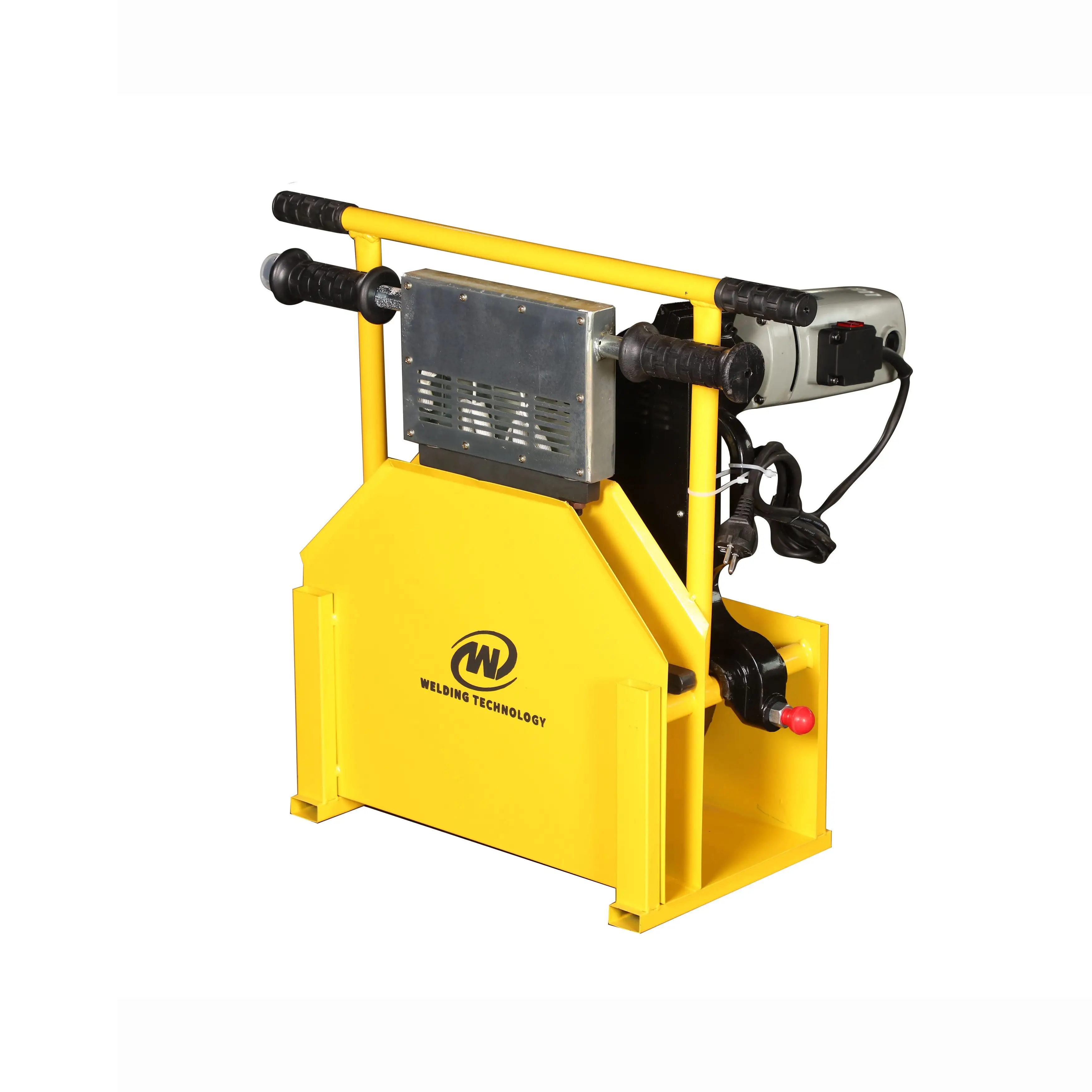
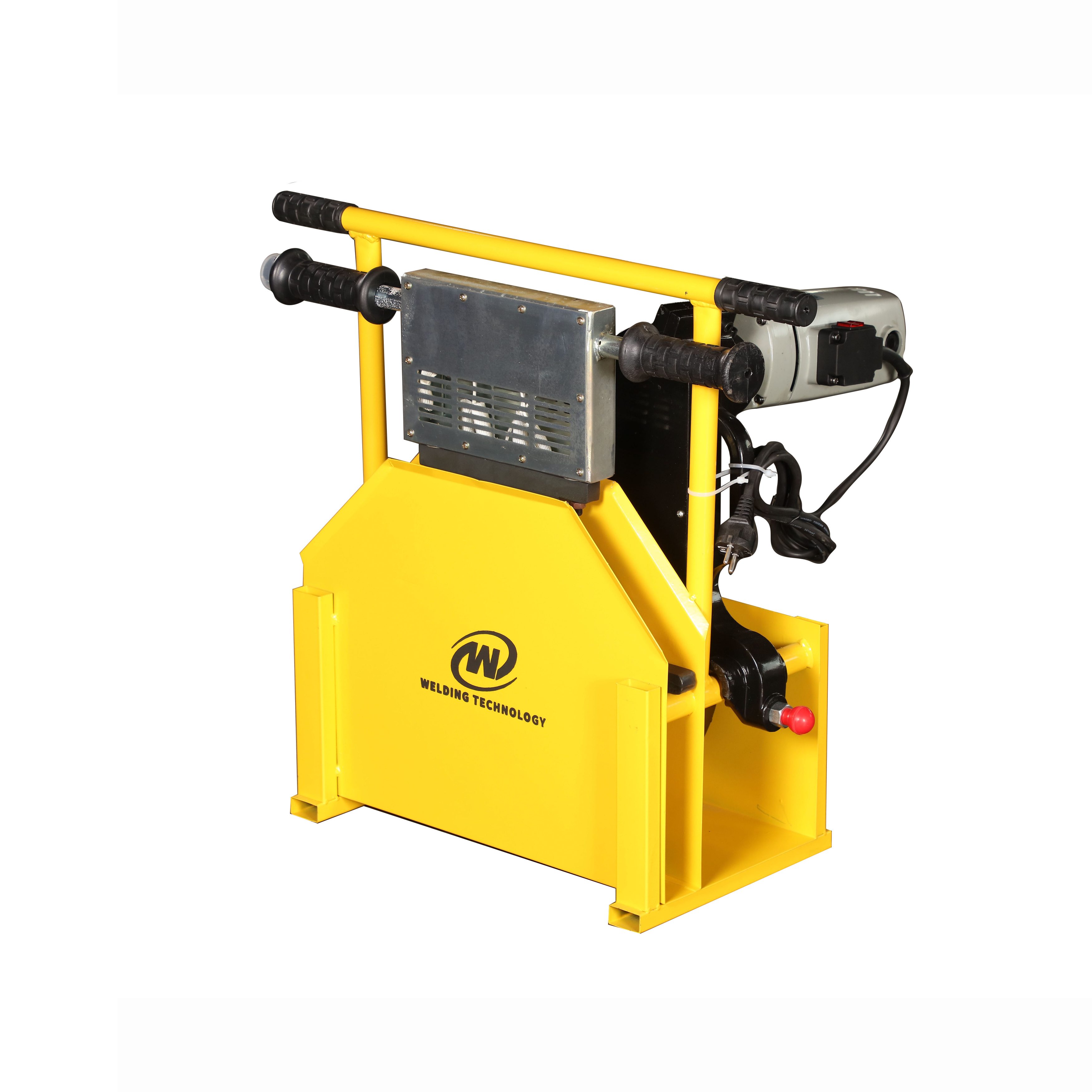
Engineers working on pipeline infrastructure projects face critical decisions that affect long-term performance, project budgets, and operational reliability. Among the most consequential choices is the selection of joining equipment for high-density polyethylene pipe systems. The HDPE thermofusion machine has emerged as the preferred solution across municipal water distribution, industrial process piping, natural gas networks, and mining operations. This preference is rooted in specific technical advantages, economic considerations, and performance outcomes that align with engineering priorities for durable, leak-free piping systems. Understanding why engineers consistently select thermofusion technology over alternative joining methods reveals the intersection of material science, field practicality, and quality assurance requirements that define modern infrastructure projects.
The engineering decision to adopt an HDPE thermofusion machine stems from fundamental requirements for joint integrity that cannot be compromised in pressurized systems. Unlike mechanical couplings or adhesive bonding methods, thermofusion creates a molecular bond between pipe sections that achieves strength equal to or exceeding the base pipe material itself. This homogeneous fusion eliminates weak points in the pipeline system, addresses concerns about long-term joint degradation, and provides performance characteristics that meet stringent design specifications for pressure rating, chemical resistance, and service life expectations. The technical rationale extends beyond initial installation to encompass lifecycle costs, maintenance requirements, and system reliability over decades of operation in demanding environments.
Molecular Bonding Superiority in Joint Integrity
Homogeneous Fusion Versus Mechanical Connections
The primary technical reason engineers specify an HDPE thermofusion machine centers on the molecular bonding process that occurs during heat fusion welding. When controlled heat is applied to prepared pipe ends, the polyethylene material reaches a molten state where polymer chains become mobile and intermingle across the joint interface. Upon cooling under controlled pressure, these intermingled chains solidify into a unified structure where the joint interface essentially disappears at the molecular level. This creates a continuous pipe section rather than an assembly of connected pieces, eliminating the stress concentration points inherent in mechanical joining systems.
Mechanical coupling systems, by contrast, rely on external compression forces, gaskets, or threaded connections that introduce discontinuities in the pipe wall structure. These discontinuities create potential failure points where differential thermal expansion, ground movement, or internal pressure fluctuations can compromise seal integrity over time. The thermofusion approach eliminates these vulnerabilities by creating what is effectively a single piece of pipe material across the entire pipeline length. Engineers recognize that this fundamental difference in joint structure translates directly to reduced leak risk, lower maintenance requirements, and extended system service life.
Pressure Rating Preservation Across Joints
A critical engineering consideration involves maintaining design pressure ratings throughout the pipeline system, including at every joint location. When an HDPE thermofusion machine creates a proper fusion joint, the resulting connection typically tests at strength levels equal to one hundred percent of the pipe's base material rating. This means engineers can design systems where joints do not represent derating factors in pressure calculations or require additional safety margins beyond those applied to straight pipe sections.
Alternative joining methods often introduce pressure rating reductions at connection points, requiring engineers to either oversize pipe diameters, reduce operating pressures, or accept shorter service life projections. The ability to maintain full pressure rating across thermofusion joints simplifies hydraulic calculations, optimizes material selection, and provides operational flexibility for future system modifications or capacity increases. This characteristic proves particularly valuable in applications involving pressure surges, thermal cycling, or variable demand patterns where joint integrity under dynamic loading conditions becomes paramount.
Chemical Resistance and Environmental Durability
The chemical inertness of polyethylene material extends seamlessly across thermofusion joints because the welded area consists of the same polymer structure as the surrounding pipe. Engineers selecting an HDPE thermofusion machine for chemical processing, mining slurry transport, or wastewater applications benefit from joints that exhibit identical resistance to aggressive media as the pipe itself. No elastomeric seals, adhesives, or dissimilar materials are introduced that might degrade when exposed to specific chemicals, solvents, or pH extremes.
This uniform material composition throughout the system eliminates concerns about galvanic corrosion, seal deterioration, or adhesive breakdown that complicate lifecycle predictions for mixed-material joining systems. In soil burial applications, thermofusion joints resist attack from organic acids, sulfates, and other compounds present in certain soil conditions that can degrade rubber gaskets or corrode metal components. The result is a pipeline system where engineers can confidently project fifty-year or longer service lives based on material properties rather than being limited by joint component vulnerabilities.
Field Application Advantages and Installation Efficiency
Adaptability to Varied Site Conditions
Engineers appreciate the operational flexibility that an HDPE thermofusion machine provides across diverse installation environments. Unlike fusion methods requiring external utilities or controlled workshop conditions, modern thermofusion equipment operates effectively in remote locations with only generator power or hydraulic power packs. This self-contained capability allows pipeline installation in areas lacking electrical infrastructure, including rural water systems, mining sites, agricultural developments, and emergency repair situations where conventional joining methods would prove impractical.
The equipment tolerates reasonable ambient temperature variations and can function in weather conditions that would halt adhesive curing or compromise mechanical assembly quality. While extreme cold requires some accommodation through preheating or enclosure use, thermofusion equipment generally provides more consistent joint quality across seasonal temperature ranges than alternative technologies. This reliability in varied conditions reduces weather-related project delays and allows year-round construction scheduling in many climate zones, contributing to overall project timeline predictability.
Quality Assurance and Joint Verification
The use of an HDPE thermofusion machine facilitates systematic quality control through standardized fusion procedures with measurable parameters. Engineers can specify precise heating temperatures, fusion pressures, cooling times, and visual inspection criteria that operators must document for each joint. Many modern machines incorporate data logging systems that record actual parameters achieved during each fusion cycle, creating permanent quality records that support warranty documentation and regulatory compliance requirements.
This procedural standardization and documentation capability addresses engineering concerns about field workmanship variability that affects other joining methods. Visual inspection of completed fusion joints reveals characteristic bead geometry that trained inspectors can evaluate for conformance to standards. Non-destructive testing methods including ultrasonic examination can verify internal joint quality when projects require additional verification. The combination of process control, visual inspection, and available non-destructive testing provides engineers with multiple quality assurance layers that build confidence in installed system integrity.
Reduced Installation Time and Labor Requirements
Economic considerations influence engineering decisions, and the installation efficiency of thermofusion technology offers measurable cost advantages. An experienced operator using an HDPE thermofusion machine can typically complete fusion cycles faster than mechanical assembly of equivalent-diameter fittings when accounting for pipe preparation, alignment, and final tightening requirements. The fusion process itself, while requiring heating and cooling time, proceeds predictably and allows crew coordination where preparation of subsequent joints occurs while earlier joints cool.
Labor requirements for thermofusion teams often prove lower than those for mechanical joining of large-diameter systems, particularly when considering the specialized skills needed for proper torque application, gasket seating, and bolt tensioning in mechanical systems. The simplified training pathway for competent thermofusion operators, combined with reduced physical demands compared to manipulating heavy mechanical couplings, contributes to lower overall installation costs. These economic factors, while secondary to technical performance, strengthen the business case that engineers present when advocating for thermofusion technology in project specifications.
Long-Term Performance and Lifecycle Cost Advantages
Maintenance-Free Joint Performance
The engineering appeal of an HDPE thermofusion machine extends well beyond initial installation to encompass decades of maintenance-free operation. Properly executed thermofusion joints require no periodic inspection, retorquing, seal replacement, or other maintenance activities that generate recurring costs in mechanically joined systems. This characteristic proves particularly valuable in buried applications where joint access requires excavation, or in remote locations where maintenance visit logistics prove expensive and disruptive.
Engineers conducting lifecycle cost analyses for pipeline projects recognize that avoided maintenance expenses over a fifty-year design life can exceed initial installation cost differences between joining technologies. The elimination of emergency repair events related to joint failures further contributes to total cost of ownership advantages. In critical applications such as water supply or industrial process systems where unplanned downtime carries significant consequential costs, the reliability advantage of thermofusion joints justifies engineering preference even when initial equipment investment exceeds that of alternative methods.
System Expansion and Modification Flexibility
Infrastructure systems evolve over their service lives through capacity expansions, route modifications, and service upgrades. Engineers value the ability to modify thermofusion-joined systems using the same HDPE thermofusion machine technology employed in original construction. New branch connections can be added through electrofusion saddles or butt-fusion tees without introducing different joining technologies that complicate future maintenance or create material compatibility concerns.
This consistency in joining methodology throughout a system's lifecycle simplifies operator training, standardizes equipment inventory, and maintains uniform joint quality expectations regardless of when specific sections were installed. The ability to confidently modify and expand systems decades after initial construction, with joint quality matching original installation, provides asset owners with operational flexibility that influences engineering recommendations during initial technology selection. Systems designed around thermofusion technology avoid the obsolescence concerns that can affect proprietary mechanical joining systems where specific coupling models or seal materials may become unavailable over time.
Environmental Considerations and Sustainability
Contemporary engineering practice increasingly incorporates environmental impact assessment into technology selection decisions. The use of an HDPE thermofusion machine aligns with sustainability objectives through several pathways. The elimination of consumable gaskets, lubricants, and metal components reduces material consumption and associated manufacturing environmental footprints. The long service life and low failure rate of thermofusion systems minimize replacement material requirements and reduce excavation-related environmental disturbance over system lifespans.
Polyethylene material itself offers recycling potential at end-of-life, and the absence of mixed materials in thermofusion joints simplifies recycling processes compared to systems incorporating metal, rubber, and plastic components. Leak prevention through superior joint integrity contributes to water conservation in distribution systems and prevents soil or groundwater contamination in wastewater or industrial applications. These environmental advantages support engineering arguments for thermofusion technology when projects undergo sustainability review or seek green infrastructure certifications.
Technical Versatility Across Application Sectors
Municipal Water and Wastewater Infrastructure
Engineers in municipal utility sectors choose an HDPE thermofusion machine for water distribution and wastewater collection projects due to specific performance requirements these applications demand. Potable water systems require absolute joint integrity to prevent both water loss through leakage and contamination ingress during pressure transients. Thermofusion joints meet both requirements through the continuous material structure that eliminates pathways for either water egress or external contamination entry.
Wastewater applications benefit from the chemical resistance and smooth internal joint profile that thermofusion provides. The absence of internal protrusions or gasket edges eliminates catch points for debris and reduces maintenance-related blockages. The joint's resistance to hydrogen sulfide and other corrosive compounds present in sewer environments supports the extended service life projections that justify infrastructure investment decisions. Municipal engineers appreciate that thermofusion technology addresses both immediate performance needs and long-term asset management objectives in these critical public service applications.
Industrial Process and Mining Applications
Industrial facilities handling aggressive chemicals, abrasive slurries, or temperature extremes require pipeline systems where joint reliability matches or exceeds straight pipe performance. Engineers specifying an HDPE thermofusion machine for these demanding applications rely on the technology's ability to maintain joint integrity under conditions that rapidly degrade alternative joining methods. Mining slurry transport, chemical processing, and industrial cooling systems all present challenges where thermofusion's homogeneous joint structure provides operational advantages.
The absence of metal components eliminates galvanic corrosion concerns in applications involving dissimilar soil conditions or stray electrical currents. The flexibility of polyethylene material, preserved across thermofusion joints, accommodates ground settlement and seismic movement better than rigid pipe systems, reducing failure risk in unstable ground conditions common to mining operations. Industrial engineers value these performance characteristics when designing systems where unplanned downtime generates significant production losses and where operating conditions exceed the capabilities of conventional piping materials and joining technologies.
Natural Gas Distribution Networks
The natural gas industry has extensively adopted thermofusion technology for distribution system construction, driven by safety requirements and leak prevention priorities. Engineers designing gas distribution networks rely on an HDPE thermofusion machine to create joints that meet stringent industry standards for leak tightness and pressure integrity. The regulatory environment surrounding gas distribution emphasizes documented quality assurance and long-term joint reliability, requirements that thermofusion technology addresses effectively through standardized procedures and performance history.
Gas distribution applications often involve numerous service connections and branch lines, where fusion technology provides consistent joint quality regardless of fitting complexity or joint orientation. The material's resistance to soil stress corrosion cracking and immunity to cathodic protection requirements simplify system design compared to metallic alternatives. These technical advantages, combined with proven safety performance over decades of gas distribution application, make thermofusion the engineering standard for new gas distribution infrastructure in many jurisdictions worldwide.
Equipment Selection and Specification Considerations
Machine Capacity and Project Scale Alignment
Engineers must match HDPE thermofusion machine specifications to project requirements, considering pipe diameter ranges, production rates, and site logistics. Equipment capacity categories span from manual machines suitable for small-diameter pipe used in service connections, through hydraulic machines handling intermediate diameters common in distribution mains, to large-capacity machines required for transmission pipelines and large-diameter industrial applications. Proper capacity selection ensures operators can maintain fusion parameters within specification while achieving production rates that meet construction schedules.
Project-scale considerations include the total linear footage of pipeline, joint frequency, crew capabilities, and timeline constraints. Large projects may justify investment in automated carriage-style machines that increase production rates and reduce operator fatigue on repetitive fusion cycles. Smaller projects or maintenance applications may require portable units optimizing mobility over maximum capacity. Engineers evaluating these trade-offs consider both immediate project needs and potential future applications that might leverage the same equipment investment, seeking optimal balance between capability and cost.
Automation Features and Quality Control Integration
Modern HDPE thermofusion machine designs incorporate varying degrees of automation and integrated quality control systems that influence engineering specifications. Fully automated machines control heating time, changeover cycles, fusion pressure application, and cooling periods according to programmed parameters derived from material specifications and joint standards. This automation reduces operator decision-making during critical fusion stages, improving consistency and reducing the skill level required for competent joint production.
Data logging capabilities allow automated recording of actual fusion parameters achieved for each joint, creating documentation that supports quality assurance programs and provides liability protection for contractors and engineers. Some advanced systems include wireless data transfer to project management platforms, enabling real-time quality monitoring and progress tracking. Engineers on projects with stringent quality requirements or regulatory documentation needs often specify machines with these advanced features, accepting higher equipment costs for the risk mitigation and quality assurance advantages they provide.
Power Source Flexibility and Site Logistics
The availability and reliability of power sources at project sites influences engineering decisions regarding HDPE thermofusion machine selection. Electric-powered machines offer simplicity and lower operating costs when grid power is accessible and reliable. Hydraulic machines powered by separate power packs provide independence from electrical infrastructure and often deliver higher clamping forces required for large-diameter pipe, making them preferable for remote sites or large-scale projects where power logistics prove challenging.
Dual-power machines that accept either electric or hydraulic input provide operational flexibility across varied project conditions, though at increased equipment cost. Engineers evaluating these options consider not only immediate project site conditions but also equipment utilization across multiple projects with differing infrastructure availability. The goal is selecting equipment configurations that maximize productive operation time while minimizing auxiliary equipment requirements that complicate site logistics and increase mobilization costs.
FAQ
What makes thermofusion joints stronger than mechanical connections in HDPE pipe systems?
Thermofusion creates a molecular bond where polymer chains from adjacent pipe sections intermingle and solidify into a homogeneous structure with strength equal to the base pipe material. This eliminates the stress concentration points and potential leak paths inherent in mechanical connections that rely on external compression and elastomeric seals. The fusion joint essentially becomes a continuous section of pipe rather than a connection between separate pieces, providing superior pressure rating, impact resistance, and long-term durability compared to mechanical joining methods.
How do engineers verify the quality of joints produced by an HDPE thermofusion machine in the field?
Quality verification combines process control, visual inspection, and non-destructive testing methods. Properly calibrated thermofusion equipment with documented operating parameters ensures consistent heating, pressure, and cooling conditions for each joint. Visual inspection examines the fusion bead geometry for uniform height, symmetry, and smooth transitions that indicate proper fusion. When additional verification is required, ultrasonic testing can detect internal voids or incomplete fusion areas without damaging the joint. Many projects use a combination of these methods, with universal visual inspection supplemented by periodic non-destructive testing on a sampling basis to validate overall joint quality across the project.
Can thermofusion technology accommodate projects in remote locations without electrical infrastructure?
Yes, hydraulic HDPE thermofusion machines operate independently of electrical grids by using hydraulic power packs driven by diesel or gasoline engines. These self-contained systems provide the heating and clamping forces necessary for fusion welding in locations where electrical service is unavailable or unreliable. Portable generators can also power electric fusion machines in remote locations, though hydraulic systems often prove more practical for large-diameter pipe requiring high clamping forces. This independence from fixed infrastructure makes thermofusion technology suitable for pipeline projects in rural areas, mining sites, and developing regions where conventional construction methods would face significant logistical challenges.
What training and certification requirements apply to operators of HDPE thermofusion machines?
Operator training requirements vary by jurisdiction and application sector, but most professional installations require completion of manufacturer-provided training programs covering fusion theory, equipment operation, quality control procedures, and safety practices. Many regions have adopted standardized certification programs such as those offered by industry associations or training institutes that include both classroom instruction and practical fusion exercises. Gas distribution applications typically mandate operator certification through programs meeting industry-specific standards. Engineers specifying thermofusion systems should verify that contractors employ operators with appropriate training credentials for the specific application and jurisdiction, as proper operator qualification directly affects joint quality and project success.
Table of Contents
- Molecular Bonding Superiority in Joint Integrity
- Field Application Advantages and Installation Efficiency
- Long-Term Performance and Lifecycle Cost Advantages
- Technical Versatility Across Application Sectors
- Equipment Selection and Specification Considerations
-
FAQ
- What makes thermofusion joints stronger than mechanical connections in HDPE pipe systems?
- How do engineers verify the quality of joints produced by an HDPE thermofusion machine in the field?
- Can thermofusion technology accommodate projects in remote locations without electrical infrastructure?
- What training and certification requirements apply to operators of HDPE thermofusion machines?