
 EN
EN


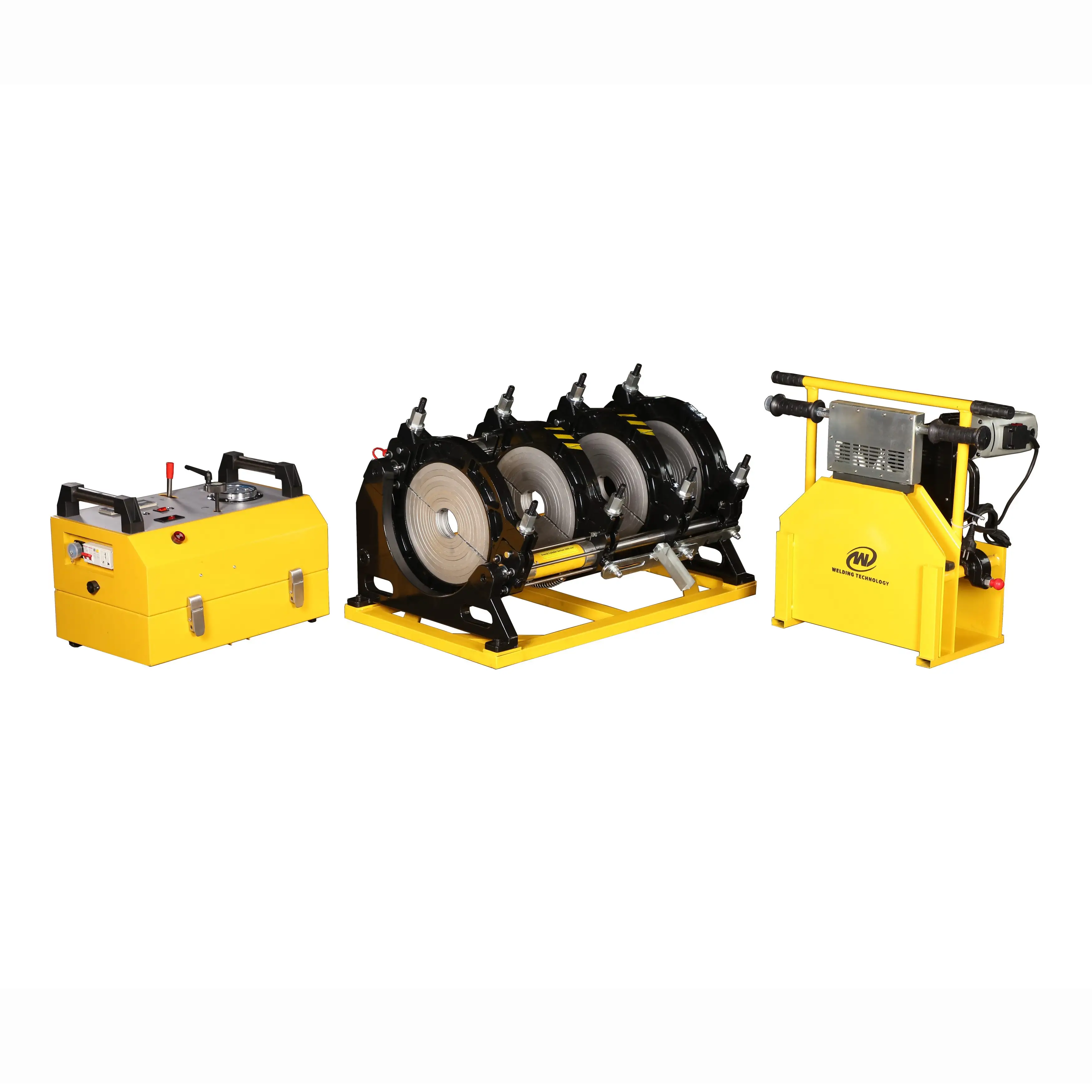
High-density polyethylene (HDPE) piping systems have become the backbone of modern infrastructure projects, from municipal water distribution networks to industrial chemical transport lines. At the heart of creating reliable, leak-free HDPE pipe connections lies a specialized piece of equipment: the HDPE thermofusion machine. This sophisticated welding apparatus enables contractors and engineers to join HDPE pipes through a controlled heat-based fusion process that creates molecular bonds stronger than the pipe material itself. Understanding what an HDPE thermofusion machine is and how it operates is essential for anyone involved in pipeline installation, maintenance, or project specification, as the quality of thermofusion welds directly impacts system integrity, longevity, and operational safety across decades of service.
An HDPE thermofusion machine is a precision engineering tool designed to heat the ends of two HDPE pipe sections to their melting point, then press them together under controlled pressure to form a homogeneous joint. Unlike mechanical coupling methods that introduce potential leak points, thermofusion creates a seamless connection where the molecular structure of both pipe ends intermingles and solidifies as a single unified piece. This fusion welding technique has become the industry standard for HDPE pipe joining because it eliminates the need for separate fittings in many applications, reduces installation time compared to other joining methods, and delivers joints that exhibit tensile strength equal to or exceeding that of the parent pipe material. The working principles of an HDPE thermofusion machine involve precise temperature control, pressure regulation, and timing sequences that must be carefully managed to ensure weld quality meets industry standards such as ASTM F2620 and DVS 2207.

Fundamental Components of an HDPE Thermofusion Machine
Heating Plate Assembly and Temperature Control Systems
The heating plate represents the central component of any HDPE thermofusion machine, serving as the thermal interface that brings pipe ends to the required fusion temperature. Manufactured from specially treated aluminum or coated steel with a non-stick PTFE surface, the heating plate must distribute heat evenly across its entire surface to prevent differential heating that could compromise weld quality. Professional-grade HDPE thermofusion machines incorporate electronic temperature controllers with digital displays that maintain the heating plate within a narrow temperature range, typically between 200°C and 230°C depending on ambient conditions and pipe material specifications. Advanced systems feature multiple heating zones with independent temperature sensors that compensate for heat loss at the plate edges, ensuring uniform temperature distribution even during extended heating cycles. The thermal mass of the heating plate, combined with its power rating measured in watts per square centimeter, determines how quickly the equipment recovers to operating temperature after each fusion cycle, directly impacting production efficiency on large-scale pipeline projects.
Temperature monitoring systems in modern HDPE thermofusion machines utilize thermocouple sensors embedded at strategic locations within the heating plate, providing continuous feedback to digital controllers that adjust power input in real-time. This closed-loop control system maintains temperature stability within plus or minus two degrees Celsius, meeting the stringent requirements of international welding standards. Some advanced HDPE thermofusion machine models incorporate data logging capabilities that record temperature profiles throughout each welding cycle, creating quality documentation that can be archived for regulatory compliance and warranty purposes. The heating element configuration, whether cartridge-style or flat-panel resistive heaters, affects both the thermal response characteristics and maintenance requirements of the equipment, with higher-quality machines using replaceable heating elements that extend the operational lifespan of the machine beyond ten thousand weld cycles.
Hydraulic Clamping and Pressure Application Systems
The clamping mechanism of an HDPE thermofusion machine must securely hold pipe sections in precise alignment while applying controlled fusion pressure during the joining process. Hydraulic systems have become the standard for professional equipment because they deliver smooth, consistent pressure application across the full range of fusion forces required for different pipe diameters. A typical hydraulic HDPE thermofusion machine incorporates a pump unit, pressure accumulator, control valves, and hydraulic cylinders that work together to maintain constant pressure throughout the fusion cycle despite minor variations in pipe wall thickness or material properties. The clamping jaws or inserts are designed to accommodate specific pipe diameter ranges, with interchangeable insert sets allowing a single machine to handle multiple pipe sizes from as small as 63mm up to 630mm or larger in heavy-duty industrial models.
Pressure regulation in an HDPE thermofusion machine follows precise calculations based on pipe diameter and wall thickness, with fusion pressure typically specified in bars or pounds per square inch applied across the interface area. Digital pressure gauges or transducers provide operators with real-time feedback, while adjustable pressure regulators allow fine-tuning to match specific material formulations or ambient temperature conditions. The mechanical design of the clamping system must resist bending or flexing under fusion pressure to maintain perfect pipe alignment, as even minor angular deviations can result in incomplete fusion at one side of the joint. Quality HDPE thermofusion machines feature reinforced steel frames with precision-machined guide rails that ensure linear movement of the hydraulic carriage, maintaining concentricity throughout the heating, changeover, and fusion phases of the welding cycle.
Frame Structure and Alignment Mechanisms
The structural frame of an HDPE thermofusion machine provides the rigid foundation necessary for maintaining precise pipe alignment throughout the fusion process. Constructed from heavy-gauge steel with reinforced cross-members, the frame must resist deflection under fusion pressures that can exceed several tons for large-diameter applications. Linear guide systems, typically ball-bearing or roller-bearing assemblies, allow smooth movement of the movable carriage while maintaining alignment tolerances measured in fractions of a millimeter. The fixed and movable clamp assemblies mount to the frame with adjustable mechanisms that enable operators to correct for minor height differences or angular misalignment before initiating the fusion cycle, ensuring that both pipe ends meet in a perfectly perpendicular plane during fusion.
Professional HDPE thermofusion machines incorporate built-in alignment verification tools such as laser guides or mechanical dial indicators that help operators confirm proper setup before beginning the welding sequence. The frame design also accommodates accessories like facing tools that machine the pipe ends to create perfectly flat, perpendicular surfaces free from oxidation or contamination prior to heating. Portable field machines feature modular frame sections that can be disassembled for transport to remote job sites, while stationary workshop units may include extended support rails and additional roller stands to handle long pipe sections. The overall rigidity and precision of the frame structure directly influences the consistency of weld quality, making this seemingly simple component a critical factor in the performance and reliability of the HDPE thermofusion machine over its operational lifetime.
The Thermofusion Welding Process Step by Step
Preparation and Pipe End Facing Operations
Before the actual fusion process begins, proper preparation of the pipe ends is critical to achieving high-quality welds with an HDPE thermofusion machine. The preparation sequence starts with thoroughly cleaning the pipe surfaces to remove dirt, moisture, and any chemical contaminants that could interfere with molecular bonding. Operators then load the pipe sections into the HDPE thermofusion machine clamps, ensuring that sufficient pipe length extends beyond the clamps to accommodate the facing operation and subsequent fusion bead formation. The facing tool, essentially a precision cutting assembly with sharp blades mounted in a rotating head, machines away a thin layer of material from both pipe ends simultaneously, creating perfectly flat, parallel surfaces that will mate precisely during fusion. This facing operation removes oxidized surface layers and any minor damage from pipe handling while establishing the clean, virgin polyethylene surface necessary for optimal molecular bonding.
During the facing process, the HDPE thermofusion machine brings the two pipe ends together against the rotating cutter, producing continuous ribbon-like shavings that indicate proper tool engagement and sharpness. The facing continues until unbroken shavings appear simultaneously from both pipe ends around the entire circumference, confirming that both surfaces have been machined to the same plane. After facing, operators carefully inspect both pipe ends to verify that no gaps, steps, or irregularities exist that could compromise the fusion joint. The faced surfaces must remain clean and protected from contamination until the heating phase begins, as even a fingerprint or dust particle can create a weak spot in the finished weld. This meticulous preparation phase, though time-consuming, establishes the foundation for successful thermofusion and represents a critical quality control point in the overall welding procedure.
Heating Phase and Temperature Stabilization
The heating phase of HDPE thermofusion machine operation begins when the operator inserts the preheated heating plate between the faced pipe ends and brings both pipes into contact with the plate surface under light pressure known as drag pressure. This initial contact pressure, typically around 0.15 to 0.20 N/mm² of interface area, ensures intimate contact between the heating plate and pipe surfaces while allowing a thin melt layer to form and extrude slightly as a bead around the pipe circumference. The formation of these initial beads, sometimes called primary beads, indicates that the polyethylene surface has reached its melting point and that heat is beginning to penetrate into the pipe wall. After the primary beads form uniformly around both pipe ends, the operator reduces the pressure to near zero, maintaining just enough contact to prevent heat loss while allowing deeper heat penetration without excessive material displacement.
The heat soak time, calculated based on pipe wall thickness and material grade, typically ranges from several seconds for thin-wall pipes to several minutes for thick-wall industrial applications. During this soak period, the heating plate continues to transfer thermal energy into the pipe wall, creating a molten zone that extends several millimeters into the material. HDPE thermofusion machine operating procedures specify precise heat soak times using formulas that account for wall thickness, with common guidelines requiring approximately six to eight seconds per millimeter of wall thickness. Throughout the heating phase, operators monitor the heating plate temperature, verify uniform bead formation around both pipe circumferences, and ensure that the pipes remain properly aligned and stable within the clamps. The consistency of heating across the entire interface area is critical to joint quality, making temperature control and timing precision essential capabilities of professional-grade HDPE thermofusion machines.
Changeover and Fusion Joining Sequence
The changeover phase represents the most time-critical operation in the HDPE thermofusion machine welding cycle, requiring operators to remove the heating plate and bring the molten pipe ends together within a specified maximum time, typically eight to twelve seconds depending on ambient conditions and pipe size. This tight time constraint exists because the molten surface layer begins cooling immediately upon heating plate removal, with surface oxidation and heat loss reducing the quality of molecular bonding if the fusion pressure is not applied quickly enough. Skilled operators develop efficient changeover techniques that minimize the time between heating plate removal and pipe contact, often using machine-integrated heating plate removal mechanisms that automatically retract the plate along guided rails to clear the space between pipe ends rapidly. During this brief interval, the molten pipe surfaces must remain free from contamination, wind exposure, or excessive cooling that could compromise the fusion joint integrity.
Once the heating plate clears the gap, the HDPE thermofusion machine operator immediately engages the hydraulic system to bring the two molten pipe ends together under controlled fusion pressure. The fusion pressure, significantly higher than the drag pressure used during heating, typically ranges from 0.15 to 0.20 N/mm² for most HDPE materials, though specific values vary based on material grade and manufacturer recommendations. As the molten surfaces contact and compress together, the molecular chains from each pipe end intermingle in the fusion zone, creating chemical bonds that integrate both sides into a single homogeneous structure. The displaced molten material forms fusion beads that extrude around the outside and inside pipe circumferences, with the size and shape of these beads providing visual indicators of proper fusion pressure and heating quality. The fusion pressure must be maintained constant throughout the cooling phase, which typically requires several minutes depending on wall thickness, as the joint solidifies and develops its full mechanical strength.
Cooling Period and Weld Quality Verification
The cooling phase of the HDPE thermofusion machine welding process is as critical as the heating and fusion phases, requiring sufficient time for the joint to solidify under maintained pressure before any movement or stress is introduced. Industry standards specify minimum cooling times based on pipe wall thickness and outside diameter, with typical formulas requiring approximately ten to twelve minutes per inch of wall thickness. During this cooling period, the HDPE thermofusion machine clamps must remain closed and pressure maintained to prevent separation or shifting of the joint as the material transitions from molten to solid state. Premature release of fusion pressure or disturbance of the joint during cooling can result in incomplete molecular bonding, internal voids, or stress concentrations that compromise long-term joint performance. Modern HDPE thermofusion machines incorporate cooling timers that alert operators when the minimum cooling time has elapsed, though experienced welders often extend cooling times in cold weather or for critical applications to ensure complete solidification.
After the cooling period completes, operators can release the clamps and remove the joined pipe from the HDPE thermofusion machine for visual inspection and quality verification. The completed weld should exhibit uniform fusion beads around the entire circumference, with bead height and width falling within specified ranges that indicate proper heating and fusion pressure application. Experienced inspectors examine the beads for symmetry, checking that inside and outside beads appear similar in size and that no gaps, irregularities, or cold fusion indicators exist at the weld interface. Advanced quality control procedures may include non-destructive testing methods or periodic destructive testing of sample welds to verify that the fusion zone exhibits the required mechanical properties. Documentation of welding parameters including heating time, fusion pressure, cooling duration, and ambient conditions creates a quality record for each joint, providing traceability and accountability that is especially important for critical infrastructure projects where weld integrity must be guaranteed over decades of service life.
Types and Classifications of HDPE Thermofusion Equipment
Manual versus Hydraulic Control Systems
HDPE thermofusion machines are broadly categorized into manual and hydraulic models based on their pressure application and control mechanisms. Manual HDPE thermofusion machines rely on mechanical screw drives or manual pumps to generate and apply fusion pressure, with operators using hand wheels or lever mechanisms to bring pipe ends together and maintain pressure during the fusion cycle. These manual systems are typically used for smaller diameter pipes, generally up to 160mm, where the fusion forces remain manageable through human effort alone. Manual machines offer advantages in terms of portability, lower initial cost, and operation in locations without electrical power for hydraulic pumps, making them popular for rural infrastructure projects or emergency repair situations. However, the manual operation introduces greater variability in pressure application consistency and requires more operator skill to achieve uniform results across multiple welds.
Hydraulic HDPE thermofusion machines utilize electrically powered hydraulic pumps to generate and precisely control fusion pressure through hydraulic cylinders and pressure regulation systems. These machines can handle the significantly higher forces required for large-diameter pipes, with industrial models capable of welding pipes up to 1600mm diameter requiring fusion forces measured in tens of tons. The hydraulic system provides smooth, consistent pressure application that is easily adjusted through pressure regulators and maintained constant throughout the fusion cycle without operator fatigue or attention. Digital pressure displays and automated pressure control systems in advanced hydraulic HDPE thermofusion machines eliminate operator judgment from pressure management, ensuring consistent fusion conditions across thousands of welds. The trade-off for these performance advantages includes higher equipment cost, greater weight requiring transportation equipment, and dependence on electrical power for hydraulic pump operation, though many professional contractors consider these limitations acceptable given the quality consistency and productivity advantages hydraulic systems provide.
Portable Field Machines versus Stationary Workshop Units
The operational environment and application requirements drive the selection between portable field HDPE thermofusion machines and stationary workshop units. Portable field machines prioritize compact dimensions, reduced weight, and modular construction that allows equipment to be transported to remote job sites and set up in confined spaces along pipeline routes. These machines typically incorporate aluminum components, simplified frame designs, and integrated tool storage that minimizes the number of separate items that must be transported to work locations. Portable HDPE thermofusion machines may feature folding frames, detachable power packs, and carrying handles that facilitate movement between fusion locations, which is essential for cross-country pipeline projects where hundreds of individual joints must be made at locations distributed over kilometers of terrain. The fusion capacity of portable machines generally ranges from 63mm to 400mm pipe diameter, covering the size range most commonly encountered in water distribution, gas service, and industrial process applications.
Stationary workshop HDPE thermofusion machines, by contrast, emphasize maximum fusion capacity, enhanced precision, and extended operational capabilities for high-volume prefabrication environments. These machines feature heavier, more rigid frame constructions that maintain alignment tolerances to higher standards, often including extended support rails, additional stabilizing elements, and precision adjustment mechanisms that exceed field machine specifications. Workshop units may incorporate automated functions such as programmable welding cycles, integrated data logging systems, and mechanical heating plate removal mechanisms that enhance productivity and consistency when fabricating large quantities of pre-welded pipe assemblies. The stationary installation allows connection to facility power systems, elimination of portability constraints on machine weight, and integration with material handling equipment like overhead cranes or roller conveyors. Many fabrication facilities operate multiple HDPE thermofusion machines simultaneously, with some installations handling pipes from 200mm to 1600mm diameter in dedicated welding bays that include environmental controls to maintain optimal ambient conditions for fusion welding.
Specialized Machines for Large Diameter and Heavy Wall Applications
Large diameter HDPE pipes used in municipal water transmission mains, outfall sewers, and industrial process systems require specialized HDPE thermofusion machines engineered to handle the substantial fusion forces and extended processing times these applications demand. Heavy-duty machines designed for pipes from 500mm to 1600mm diameter feature massively reinforced frame structures, high-capacity hydraulic systems with multiple cylinders, and heating plates with power ratings exceeding ten kilowatts to maintain temperature stability across large surface areas. These specialized HDPE thermofusion machines often incorporate automated alignment systems using laser guides or electronic sensors that detect and correct misalignment beyond manual adjustment capabilities. The heating and cooling cycles for large diameter, heavy wall pipes extend to thirty minutes or more, requiring machines with exceptional temperature stability and pressure maintenance capabilities that prevent drift or variation during these extended process times.
Some specialized HDPE thermofusion machine designs address specific application challenges such as welding in vertical orientations for manhole connections, performing fusion operations on pipes already installed in trenches, or creating branch connections using saddle fusion attachments. Vertical welding machines incorporate mechanical supports and specialized clamping systems that secure pipes against gravity during the fusion cycle, while trench welding machines feature compact profiles and offset heating plate configurations that operate in confined spaces. Saddle fusion attachments transform standard butt fusion HDPE thermofusion machines into branch connection tools by adding heated forming surfaces that simultaneously fuse a branch outlet fitting to the main pipe wall. These specialized capabilities expand the application scope of thermofusion technology beyond linear pipe joining to encompass complete piping system fabrication including complex geometries, multiple connections, and integrated fittings all joined through the same reliable fusion welding process.
Quality Control and Industry Standards for Thermofusion Welding
Visual Inspection Criteria and Fusion Bead Analysis
Visual inspection represents the primary field quality control method for HDPE thermofusion machine welds, with trained inspectors evaluating fusion bead characteristics to verify proper welding parameters and joint quality. A properly executed thermofusion weld exhibits symmetrical fusion beads around the entire pipe circumference on both inside and outside surfaces, with bead height typically ranging from one to three millimeters depending on pipe diameter and wall thickness. The bead profile should show a smooth, rounded shape without sharp edges, flat zones, or irregular contours that might indicate improper heating, insufficient fusion pressure, or premature cooling. Inspectors examine the bead roll-back zone, the transition area between the bead and the parent pipe surface, looking for smooth, gradual transitions without abrupt steps or separation lines that could indicate incomplete fusion or contamination at the weld interface.
Color and texture of the fusion beads provide additional quality indicators, with proper HDPE thermofusion machine welds showing uniform color matching the parent pipe material without discoloration, charring, or evidence of degradation from excessive heating. The fusion zone should be free from voids, porosity, or inclusions visible at the bead surfaces, as these defects indicate contamination, moisture, or improper material consolidation during the fusion process. Measurement tools including bead height gauges and profile templates help inspectors quantify bead dimensions and compare them against specification limits, with deviations beyond acceptable ranges triggering weld rejection and removal. Documentation of visual inspection findings, including photographs of completed welds and measurement data, creates quality records that demonstrate compliance with project specifications and provide accountability for welding performance throughout the system lifecycle.
Destructive Testing Protocols and Mechanical Property Verification
Destructive testing of sample welds made with HDPE thermofusion machines provides definitive verification that fusion joints achieve the required mechanical properties and structural integrity. The tensile test, where a sample joint is pulled to failure in a universal testing machine, confirms that the fusion zone exhibits strength equal to or exceeding the parent pipe material, with properly executed welds typically failing in the pipe wall adjacent to the weld rather than through the fusion interface itself. Test specimens are prepared following standardized procedures that specify sample dimensions, test speed, and failure criteria, with results documented as minimum tensile strength values that must meet or exceed material specification requirements. Many project specifications require tensile testing of qualification welds before production welding begins and periodic verification testing during production to confirm continued process control.
Bend testing provides complementary assessment of HDPE thermofusion machine weld quality by subjecting sample joints to controlled bending until failure occurs or a specified deflection is achieved. This test evaluates both the strength and ductility of the fusion zone, with quality joints exhibiting flexibility comparable to the parent pipe without cracking, delamination, or brittle failure at the weld interface. Hydrostatic burst testing subjects welded pipe sections to internal pressure until failure, verifying that the joint withstands pressures significantly above the rated working pressure without leaking or failing at the fusion zone. These destructive tests, while requiring removal of sample sections from production welds, provide the most reliable confirmation that HDPE thermofusion machine operations achieve the joint quality necessary for long-term system performance, making them valuable quality assurance tools despite their cost and material consumption.
International Standards and Certification Requirements
HDPE thermofusion machine operation and weld quality verification follow internationally recognized standards developed by organizations including ASTM International, the German DVS organization, and ISO committees. ASTM F2620 provides comprehensive guidance for heat fusion joining of polyethylene pipe and fittings, specifying equipment requirements, welding procedures, operator qualification, and quality control measures that apply across various HDPE applications. This standard details the fusion process parameters including heating temperatures, fusion pressures, timing sequences, and cooling periods, establishing consistent practices that ensure weld quality regardless of geographic location or contractor. DVS 2207 guidelines, widely adopted in European markets, provide similar procedural specifications with particular emphasis on operator certification and documentation requirements that create traceability for every fusion joint in critical infrastructure applications.
Operator certification programs verify that technicians possess the knowledge and practical skills necessary to operate HDPE thermofusion machines correctly and consistently produce quality welds. Certification curricula include theoretical instruction on thermoplastics properties, fusion welding principles, and quality control methods, combined with hands-on training where candidates demonstrate proficiency in machine setup, parameter selection, welding execution, and inspection procedures. Many certification programs specify recertification intervals, typically every two to three years, ensuring that operators maintain current knowledge of evolving standards and best practices. Project specifications frequently require that all thermofusion welding be performed by certified operators using calibrated HDPE thermofusion machines that have been verified for proper operation through documented equipment checks. This emphasis on qualified personnel and validated equipment reflects the critical importance of fusion joint quality to overall pipeline system reliability and longevity.
FAQ
What temperature does an HDPE thermofusion machine heating plate operate at?
An HDPE thermofusion machine heating plate typically operates at temperatures between 200°C and 230°C (392°F to 446°F), with the specific temperature depending on ambient conditions, HDPE material grade, and manufacturer recommendations. Most fusion operations use heating plate temperatures around 210°C to 220°C, which provides sufficient thermal energy to create the molten layer necessary for molecular bonding while avoiding excessive material degradation or thermal damage. Modern HDPE thermofusion machines incorporate digital temperature controllers that maintain the heating plate within plus or minus two degrees of the target temperature, ensuring consistent heating across multiple welding cycles and preventing temperature-related weld defects.
How long does a complete fusion welding cycle take with an HDPE thermofusion machine?
A complete HDPE thermofusion machine welding cycle duration varies based on pipe diameter and wall thickness, typically ranging from fifteen minutes for small diameter thin-wall pipes to over an hour for large diameter heavy-wall applications. The cycle includes preparation time for pipe facing and cleaning, heating time calculated at approximately six to eight seconds per millimeter of wall thickness, a brief changeover period of eight to twelve seconds, and cooling time of roughly ten to twelve minutes per inch of wall thickness under maintained fusion pressure. For a common 200mm diameter pipe with 18mm wall thickness, the total cycle time typically runs about thirty to forty minutes from initial setup to completed weld release from the machine clamps.
Can an HDPE thermofusion machine weld pipes of different diameters together?
An HDPE thermofusion machine cannot directly butt-fuse pipes of different diameters because the fusion process requires equal surface areas to be joined under controlled pressure. However, the technology accommodates diameter transitions through the use of reducer fittings that are thermofusion welded to each pipe size separately. The HDPE thermofusion machine can weld pipes of different wall thicknesses provided they share the same outside diameter, using appropriate parameter adjustments for the thicker-wall section to ensure adequate heat penetration. Some specialized fusion equipment also enables saddle fusion techniques where branch connections of smaller diameter are fused onto the wall of larger main pipes, creating tee or wye configurations without requiring equal diameter surfaces.
What maintenance does an HDPE thermofusion machine require for reliable operation?
Regular HDPE thermofusion machine maintenance includes daily cleaning of the heating plate surface to remove any residual polyethylene deposits using appropriate tools that do not damage the non-stick coating, inspection and lubrication of moving parts including guide rails and hydraulic cylinders, and verification of hydraulic fluid levels and condition. Periodic calibration of temperature controllers and pressure gauges ensures that displayed values accurately reflect actual operating conditions, typically performed annually or according to manufacturer specifications. The heating plate coating should be inspected for wear or damage that could affect heat transfer uniformity, with replacement heating plates installed when coating degradation becomes apparent. Comprehensive maintenance also includes verification of all safety systems, inspection of electrical connections and hydraulic hoses for signs of wear, and documentation of maintenance activities to establish equipment service history that supports quality assurance requirements.
Table of Contents
- Fundamental Components of an HDPE Thermofusion Machine
- The Thermofusion Welding Process Step by Step
- Types and Classifications of HDPE Thermofusion Equipment
- Quality Control and Industry Standards for Thermofusion Welding
-
FAQ
- What temperature does an HDPE thermofusion machine heating plate operate at?
- How long does a complete fusion welding cycle take with an HDPE thermofusion machine?
- Can an HDPE thermofusion machine weld pipes of different diameters together?
- What maintenance does an HDPE thermofusion machine require for reliable operation?