
 EN
EN


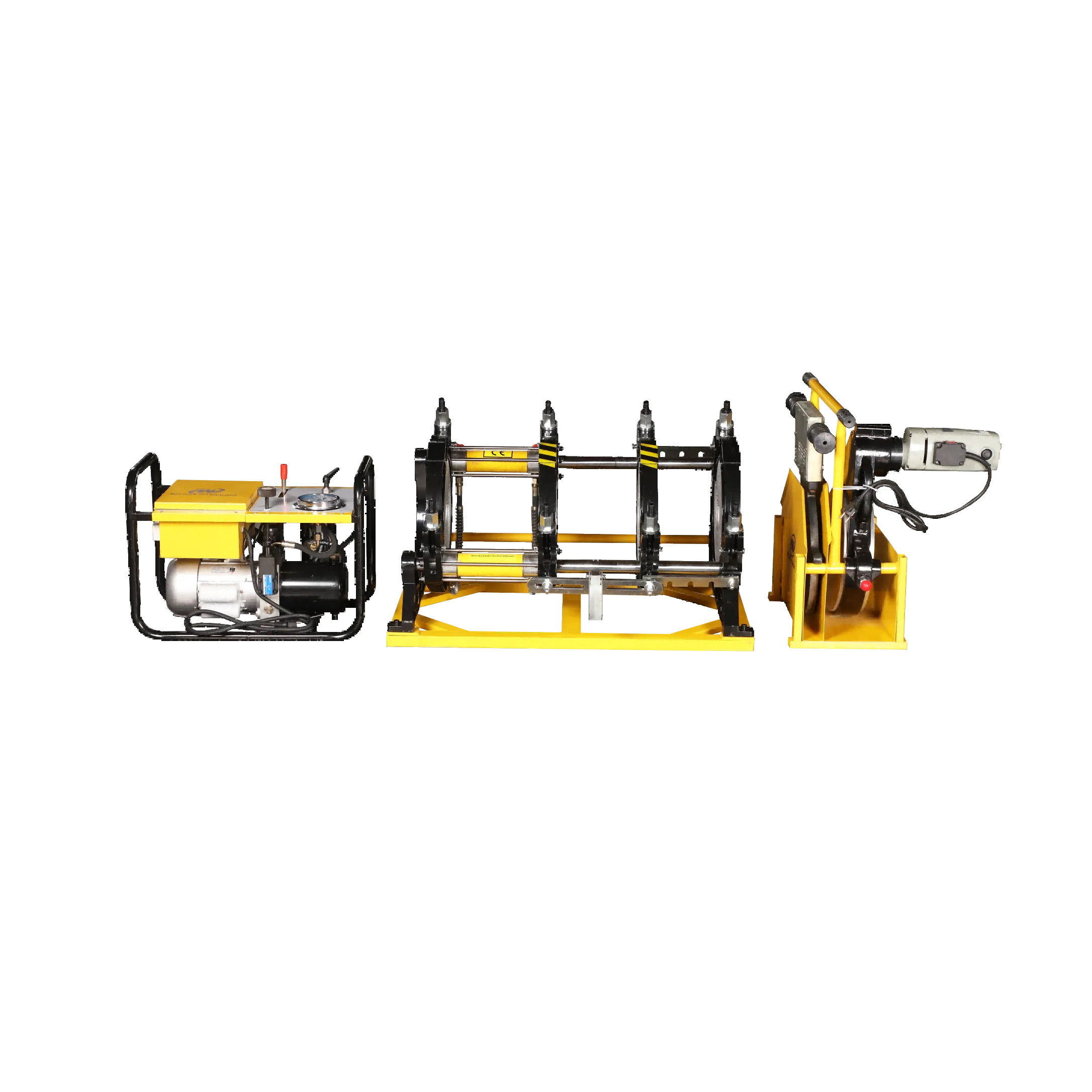
Pipeline integrity stands as a critical concern across industries ranging from municipal water distribution to industrial gas transport, and the welding technology employed directly determines long-term performance outcomes. An HDPE thermofusion machine represents a specialized equipment category engineered to create molecular-level bonds between high-density polyethylene pipe sections, fundamentally transforming how modern pipeline systems achieve structural continuity. Unlike mechanical joining methods that introduce potential failure points through fasteners or adhesives, thermofusion technology generates homogeneous welds where the joint strength often exceeds the parent pipe material itself, directly addressing performance challenges related to leakage, pressure capacity, and operational longevity.
The performance enhancement mechanism delivered by HDPE thermofusion machines operates through precise thermal control that enables polymer chain entanglement at the molecular interface, creating seamless continuity throughout the pipeline network. This welding approach eliminates the mechanical stress concentrations inherent in threaded connections or the chemical degradation risks associated with solvent-based joining methods. For engineering teams responsible for pipeline system design and installation, understanding how thermofusion equipment specifically improves performance metrics requires examining the fusion process mechanics, joint quality characteristics, pressure integrity advantages, and long-term reliability factors that collectively define modern HDPE pipeline standards.

Molecular Fusion Process and Joint Integrity Enhancement
Thermal Interface Control and Polymer Chain Entanglement
The performance improvement delivered by an HDPE thermofusion machine begins at the molecular level where controlled heating transforms the crystalline polymer structure into a viscous melt state. During the fusion cycle, the machine's heated plate raises pipe end surfaces to temperatures typically between 200 and 230 degrees Celsius, creating a precisely controlled melt layer approximately 1 to 2 millimeters deep. This thermal interface preparation allows polymer chains from opposing pipe sections to intermingle and entangle across the joint boundary when pressure is applied during the fusion phase. The resulting molecular interpenetration creates a weld zone where material continuity extends seamlessly from one pipe section to the next, eliminating the discrete boundary that characterizes mechanical joints.
The molecular entanglement achieved through thermofusion directly translates to joint strength that matches or exceeds the base pipe material properties. Laboratory testing consistently demonstrates that properly executed thermofusion welds fail in the parent material rather than at the weld interface when subjected to tensile or pressure testing. This performance characteristic proves particularly significant for high-pressure applications where joint failure represents the primary risk vector for system integrity. An HDPE thermofusion machine equipped with microprocessor-controlled heating and pressure sequencing ensures repeatable fusion parameters across multiple joints, maintaining consistent molecular bond quality throughout extended pipeline installations.
Elimination of Mechanical Stress Concentrations
Traditional mechanical joining methods introduce geometric discontinuities that function as stress concentration points under internal pressure loading or external mechanical forces. Threaded connections create abrupt wall thickness transitions, while compression fittings rely on localized clamping forces that generate non-uniform stress distributions. These stress concentrations accelerate fatigue crack initiation and propagation, particularly under cyclic loading conditions common in pumped systems or thermally cycling applications. The homogeneous joint structure produced by an HDPE thermofusion machine eliminates these stress risers by maintaining uniform wall geometry and material properties across the weld zone.
The absence of mechanical fasteners or separate coupling components also removes potential corrosion sites and loosening mechanisms that compromise long-term joint integrity. In environments exposed to ground movement, thermal expansion, or vibration loading, the monolithic structure created through thermofusion maintains joint security without requiring periodic retorquing or seal replacement. This structural continuity directly improves pipeline performance by preventing the gradual degradation pathways that affect mechanically assembled systems, particularly in buried installations where access for maintenance proves difficult and costly.
Controlled Bead Formation and Quality Verification
The fusion bead geometry created during the welding process serves as both a structural element and a visual quality indicator for joint integrity assessment. An HDPE thermofusion machine operating within specified parameters produces symmetrical fusion beads on both the external and internal pipe surfaces, with bead dimensions correlating directly to fusion pressure and melt volume. These beads represent displaced molten material that confirms complete surface contact and adequate fusion energy input during the welding cycle. Qualified welding operators assess bead height, width, and symmetry according to established acceptance criteria, providing immediate quality verification without requiring destructive testing.
The relationship between bead characteristics and joint performance enables real-time quality assurance during pipeline installation. Undersized or asymmetric beads indicate insufficient heating, inadequate pressure, or misalignment issues that may compromise weld strength. Modern HDPE thermofusion machines incorporate data logging systems that record fusion parameters for each joint, creating permanent quality documentation that supports performance warranty claims and regulatory compliance requirements. This combination of visual inspection and parameter verification provides dual-layer quality control that mechanical joining methods cannot match, directly contributing to improved long-term pipeline reliability.
Pressure Integrity and Leak Prevention Performance
Homogeneous Material Structure Across Joint Interface
The leak-tight performance characteristic that distinguishes thermofusion joints from mechanical alternatives stems from the absence of discrete sealing elements or interface gaps. When an HDPE thermofusion machine creates a properly executed weld, the resulting joint contains no sealing surfaces that rely on compression force or elastomeric materials to prevent fluid migration. Instead, the molecular continuity across the fusion zone creates a barrier equivalent to the pipe wall itself, with identical impermeability characteristics. This fundamental structural difference eliminates the primary failure modes associated with gasketed joints, including seal deterioration, compression set, and interface contamination.
Pressure testing protocols for thermofusion-welded HDPE pipeline systems routinely demonstrate leak-free performance at pressures exceeding design working pressures by substantial margins. The homogeneous material structure prevents the micro-leakage pathways that develop in threaded connections as thread engagement loosens or in compression fittings as gasket materials age and lose resilience. For critical applications transporting potable water, natural gas, or chemical products, this absolute leak prevention capability directly improves both safety performance and operational efficiency by eliminating product loss and contamination risks throughout the pipeline service life.
Resistance to Pressure Surge and Cyclic Loading
Pipeline systems frequently experience pressure transients from pump starts, valve closures, or flow rate changes that generate pressure waves exceeding steady-state design pressures. These surge events subject joints to rapid loading cycles that test the structural integrity of connection methods. The molecular bond created by an HDPE thermofusion machine responds to pressure surges with the same elastic behavior exhibited by the parent pipe material, absorbing and dissipating pressure wave energy without introducing compliance differences that amplify stress concentrations. This uniform response characteristic prevents the fatigue damage accumulation that affects mechanical joints incorporating dissimilar materials or geometric discontinuities.
Long-term cycling performance tests demonstrate that thermofusion welds maintain pressure integrity through millions of load cycles without degradation, matching the fatigue resistance of virgin HDPE pipe material. This performance attribute proves particularly valuable in applications such as water distribution networks with daily demand cycling, industrial process systems with batch operation patterns, or irrigation systems with seasonal use profiles. The absence of separate sealing components eliminates the relaxation and compression set phenomena that gradually compromise gasket-dependent joints under cyclic loading, directly extending maintenance-free service life and improving overall system reliability.
Temperature Stability and Thermal Expansion Accommodation
HDPE pipeline systems exhibit significant thermal expansion coefficients compared to metallic piping materials, requiring joint designs that accommodate dimensional changes without generating excessive stress or compromising seal integrity. The monolithic structure produced by an HDPE thermofusion machine allows the joint zone to expand and contract uniformly with the connected pipe sections, eliminating the differential movement that occurs at mechanical coupling interfaces. This coordinated thermal response prevents the cyclic stress loading that accelerates gasket wear and reduces the risk of coupling separation under extreme temperature excursions.
The thermal stability of thermofusion welds themselves maintains joint integrity across the full temperature range encountered in typical pipeline applications. Unlike adhesive-bonded or solvent-welded joints that may experience bond degradation at elevated temperatures or embrittlement at low temperatures, the molecular structure created through thermofusion exhibits performance characteristics identical to the base material across the entire service temperature spectrum. This temperature-independent reliability directly improves pipeline performance in applications exposed to seasonal temperature variations, solar heating effects, or process temperature fluctuations that would compromise alternative joining methods.
Long-Term Durability and Maintenance Cost Reduction
Chemical Resistance and Environmental Stress Crack Prevention
The chemical composition homogeneity achieved through thermofusion welding ensures that joints exhibit the same chemical resistance properties as the pipe material itself, without introducing dissimilar materials that may be preferentially attacked by transported fluids or external soil conditions. An HDPE thermofusion machine creates weld zones free from the elastomeric seals, metal components, or adhesive residues present in mechanical joints, eliminating potential pathways for chemical degradation. This material consistency proves critical in applications transporting aggressive chemicals, wastewater containing dissolved organics, or natural gas with trace contaminants that could attack vulnerable joint materials over extended exposure periods.
Environmental stress cracking resistance represents a key performance parameter for HDPE pipeline systems, as localized stress concentrations combined with chemical exposure can initiate slow crack growth that eventually compromises structural integrity. The uniform stress distribution and absence of geometric discontinuities in thermofusion welds prevent the stress concentration conditions that trigger environmental stress crack initiation. This crack resistance directly improves long-term pipeline performance by eliminating a primary failure mechanism that affects both the pipe material and joint regions in systems subjected to combined mechanical and chemical loading conditions.
Elimination of Periodic Maintenance Requirements
Mechanical pipeline joints require periodic inspection and maintenance to ensure continued leak-tight performance, including retorquing of threaded connections, gasket replacement in flanged joints, and seal inspection in compression fittings. These maintenance activities generate recurring labor costs and system downtime while introducing opportunities for improper reassembly or component degradation during service. The permanent, maintenance-free nature of joints created by an HDPE thermofusion machine eliminates these recurring costs and operational interruptions, directly improving lifecycle economic performance while reducing the risk of maintenance-induced failures.
The buried installation environment typical for HDPE pipeline systems makes joint access for maintenance particularly challenging and expensive, often requiring excavation, traffic control, and restoration activities that multiply the direct maintenance cost. Thermofusion welds maintain their as-installed integrity indefinitely without requiring access or intervention, eliminating the need for valve placement solely to facilitate joint maintenance or the installation of inspection chambers for periodic joint monitoring. This installation flexibility directly improves system design efficiency while reducing both initial construction costs and long-term maintenance burden.
Service Life Extension and System Reliability
Pipeline performance ultimately measures against service life expectancy and reliability metrics that quantify unplanned failure frequency and consequences. The molecular bond integrity created by an HDPE thermofusion machine positions thermofusion welds as permanent joints with service life expectations matching the 50 to 100-year design life typical for HDPE pipe materials. This longevity characteristic contrasts sharply with mechanical joints incorporating elastomeric components that experience predictable degradation timelines requiring scheduled replacement, or threaded connections susceptible to corrosion and loosening that reduce effective service life.
System reliability analysis consistently identifies joints as the highest probability failure points in pipeline networks employing mechanical connection methods. The elimination of discrete joint failure modes through thermofusion welding directly improves overall system reliability by reducing the failure rate to that of the pipe material itself. For critical infrastructure applications where service interruptions generate substantial economic impacts or safety consequences, this reliability improvement represents a primary performance benefit that justifies the investment in quality thermofusion equipment and trained welding personnel. The cumulative effect of superior joint reliability across hundreds or thousands of connections in a typical pipeline network produces measurable improvements in system availability and operational continuity.
Installation Quality Control and Consistent Performance Outcomes
Automated Parameter Control and Process Repeatability
Modern HDPE thermofusion machine designs incorporate microprocessor control systems that manage heating temperature, interface pressure, heating duration, and fusion pressure according to programmed parameters derived from established welding procedures. This automated control eliminates the operator variability that affects manual welding processes, ensuring that each joint receives identical thermal and mechanical inputs regardless of individual operator technique differences. The resulting process repeatability directly improves pipeline performance consistency by preventing the weak joints that inevitably occur in manual processes affected by operator fatigue, distraction, or inadequate training.
The closed-loop control systems employed in advanced HDPE thermofusion machines monitor actual process conditions and adjust heating or pressure application in real time to compensate for variables such as ambient temperature, pipe material temperature, or hydraulic system response. This adaptive control maintains fusion quality across changing field conditions that would otherwise introduce performance variability. The combination of programmed parameters and real-time monitoring produces joint quality distributions with minimal variation, concentrating performance outcomes at the target specification rather than across a wide range that inevitably includes marginal joints at the lower quality tail of the distribution.
Comprehensive Data Logging and Quality Documentation
Quality assurance protocols for critical pipeline installations increasingly require objective documentation of welding parameters for each joint rather than relying solely on visual inspection and operator certification. An HDPE thermofusion machine equipped with data logging capability records time-stamped parameter histories including heating plate temperature, interface pressure, heating duration, changeover time, and fusion pressure for permanent archival storage. This documentation creates a complete quality record that supports warranty claims, regulatory compliance verification, and forensic investigation in the unlikely event of joint failure during service.
The availability of comprehensive welding records enables statistical process control analysis that identifies parameter drift, equipment calibration requirements, or operator performance trends before they result in out-of-specification joints. This proactive quality management approach directly improves pipeline performance by preventing the installation of defective joints rather than discovering problems through post-installation testing or field failures. For large-scale pipeline projects involving thousands of joints, the ability to verify that every connection received proper fusion parameters provides assurance that system-wide performance will meet design expectations throughout the intended service life.
Operator Training Standardization and Skill Transfer
The performance consistency achieved with an HDPE thermofusion machine depends significantly on operator knowledge and technique, particularly for setup procedures, pipe preparation, and alignment verification. Standardized training programs developed by equipment manufacturers and industry associations establish competency criteria that ensure operators understand the relationship between process parameters and joint quality outcomes. These training protocols emphasize the critical control points in the fusion sequence where operator action directly influences final weld integrity, including surface cleaning procedures, heating face pressure application, and changeover timing.
The technical complexity of thermofusion equipment requires that operators develop both theoretical understanding and practical skills through supervised training and qualification testing. This formalized skill development process contrasts with the informal on-the-job training typical for mechanical joining methods, producing a workforce with consistent capability levels and standardized technique execution. The resulting improvement in installation quality directly enhances pipeline performance by ensuring that the theoretical advantages of thermofusion technology translate into actual field-installed joint quality. For contractors and asset owners, investment in comprehensive operator training programs represents a critical complement to equipment acquisition that maximizes the performance benefits available from HDPE thermofusion machine technology.
FAQ
What makes thermofusion welds stronger than mechanical pipe connections?
Thermofusion welds achieve superior strength through molecular-level polymer chain entanglement that creates material continuity across the joint interface, eliminating the discrete boundary present in mechanical connections. This homogeneous structure allows the weld zone to exhibit tensile strength and pressure capacity matching or exceeding the parent pipe material, while mechanical joints introduce stress concentrations at threads, gaskets, or fasteners that reduce effective joint strength. Laboratory testing consistently shows thermofusion welds failing in the pipe material rather than at the weld interface, confirming that the joint itself represents the strongest point in the assembled pipeline system rather than a weak link requiring design consideration.
How does thermofusion technology prevent pipeline leaks more effectively than gasket-based joints?
The leak prevention superiority of thermofusion joints stems from the absence of discrete sealing interfaces that rely on compression force or elastomeric materials to prevent fluid migration. An HDPE thermofusion machine creates molecular continuity across the weld zone that provides the same impermeability as the solid pipe wall, eliminating the micro-leakage pathways that develop in gasketed joints as sealing materials age, lose compression, or experience chemical degradation. This fundamental structural difference means thermofusion welds maintain absolute leak-tight integrity throughout the pipeline service life without requiring maintenance, periodic retorquing, or seal replacement activities necessary to sustain gasket-dependent joint performance.
Can thermofusion welding accommodate different pipe wall thicknesses or pressure ratings?
Thermofusion welding procedures specifically address wall thickness variations through standardized parameter adjustments that ensure complete fusion across the entire wall cross-section regardless of dimension differences. Modern HDPE thermofusion machines allow programming of heating time, interface pressure, and fusion pressure based on pipe diameter and wall thickness specifications, accommodating the full range of pressure ratings available in HDPE pipe product lines. However, engineering standards typically require that joined pipe sections have identical or closely matched wall thicknesses to prevent stress concentrations at the weld interface, with significant dimension differences addressed through transition fittings that distribute stress over extended lengths rather than concentrated at a single joint location.
What environmental conditions affect thermofusion welding quality and how are they managed?
Ambient temperature, wind conditions, precipitation, and contamination exposure all influence thermofusion welding outcomes by affecting heating uniformity, cooling rates, and surface preparation quality. Field welding protocols establish environmental limits including minimum ambient temperatures, maximum wind speeds, and precipitation restrictions that define acceptable working conditions for quality weld production. When conditions approach these limits, operators employ protective enclosures, supplemental heating, or extended cooling times to maintain proper fusion parameters. Advanced HDPE thermofusion machines incorporate temperature compensation algorithms that adjust heating duration based on measured pipe temperature, automatically accounting for cold material conditions that would otherwise require manual parameter modification to achieve proper fusion quality.
Table of Contents
- Molecular Fusion Process and Joint Integrity Enhancement
- Pressure Integrity and Leak Prevention Performance
- Long-Term Durability and Maintenance Cost Reduction
- Installation Quality Control and Consistent Performance Outcomes
-
FAQ
- What makes thermofusion welds stronger than mechanical pipe connections?
- How does thermofusion technology prevent pipeline leaks more effectively than gasket-based joints?
- Can thermofusion welding accommodate different pipe wall thicknesses or pressure ratings?
- What environmental conditions affect thermofusion welding quality and how are they managed?