
 EN
EN


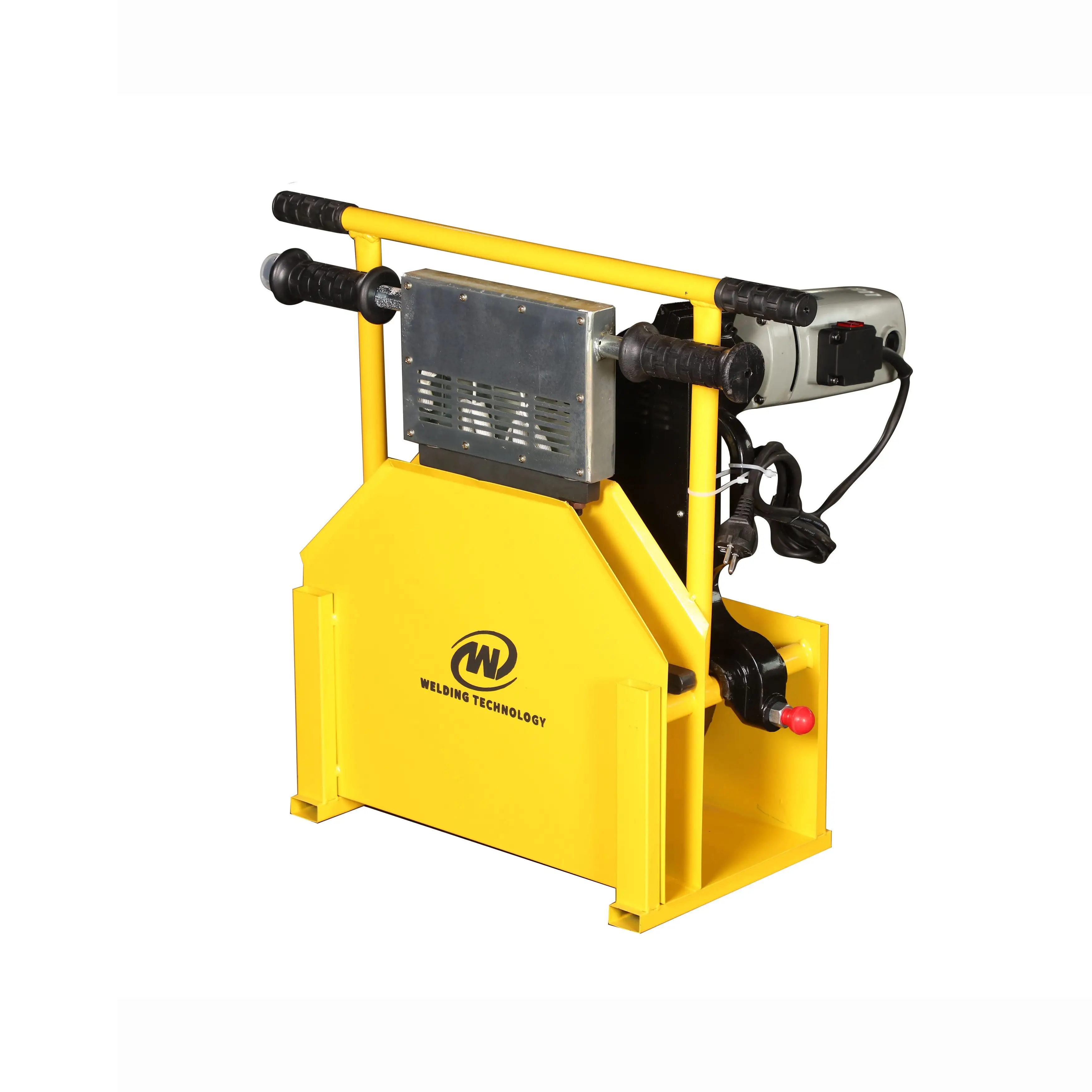
When engineers and project managers plan modern pipeline infrastructure, the method used to join pipe segments is just as critical as the material chosen for the pipes themselves. An HDPE thermofusion welding machine is at the center of this process, providing a reliable, pressure-rated, and chemically resistant joint that mechanical fittings simply cannot match. Understanding what this equipment does and where it is applied helps procurement teams, contractors, and project engineers make better decisions from the start of a pipeline project.

The HDPE thermofusion welding machine applies controlled heat and pressure to bond two HDPE pipe ends together at a molecular level. The result is a monolithic, seamless joint that is as strong as or stronger than the original pipe material. This technology has become the standard across water distribution, gas transmission, industrial piping, and civil infrastructure projects worldwide, precisely because of its performance consistency and long service life.
The Core Function of an HDPE Thermofusion Welding Machine in Pipeline Systems
How the Fusion Process Creates a Structural Bond
The operating principle of an HDPE thermofusion welding machine centers on the thermoplastic nature of high-density polyethylene. When HDPE is brought to its melting temperature range, the polymer chains become mobile and can intermingle across the interface of two components pressed together. Once pressure is applied and the material cools, those chains lock together, forming a joint that has no adhesive, no solvent, and no mechanical fastener involved.
A butt fusion version of the HDPE thermofusion welding machine uses a flat heating plate, commonly called a heater plate or mirror, to simultaneously heat both pipe faces to the correct fusion temperature. When the plate is removed, the two softened faces are pressed together under a defined pressure profile. This sequence—heating, plate removal, and fusion under pressure—is what separates a technically sound joint from a weak one.
Hydraulic systems in modern HDPE thermofusion welding machines ensure that the fusion pressure follows a precise, repeatable curve. Manual or pneumatic systems introduce variability that can compromise joint integrity. For pipeline applications where long-term pressure ratings and leak-free performance are non-negotiable, hydraulic precision is not a luxury but a necessity.
Joint Quality and Integrity Standards
A correctly performed fusion joint produced by an HDPE thermofusion welding machine meets or exceeds the pressure rating of the parent pipe. This is a fundamentally different outcome compared to flanged or threaded connections, which introduce stress concentration points and sealing surfaces that can degrade over time.
International standards such as ISO 21307 and ASTM F2620 define the parameters under which an HDPE thermofusion welding machine must operate to produce an acceptable joint. These include heater plate temperature, heating time, drag pressure compensation, bead-up pressure, heat soak duration, and fusion force. Machines with digital parameter control and logging capabilities allow operators to record and verify these values for each weld, which is increasingly required on regulated pipelines.
Visual inspection of the fusion bead—the rolled bead of melted material that forms at the joint—provides an initial indication of joint quality. However, for critical pipeline infrastructure, destructive and non-destructive testing protocols further validate that the HDPE thermofusion welding machine has produced a structurally sound connection throughout the installation.
Primary Pipeline Applications of an HDPE Thermofusion Welding Machine
Water Supply and Distribution Networks
Municipal and industrial water supply networks represent one of the largest application areas for the HDPE thermofusion welding machine. HDPE pipes jointed by thermofusion are fully leak-free, meaning there is no permeation of contaminants into the water column and no loss of treated water to the surrounding ground. This is a significant operational and public health advantage over gasketed joints commonly used with older pipe materials.
The flexibility of a fusion-jointed HDPE pipeline also makes it highly resistant to seismic activity and ground movement. In areas prone to subsidence or settlement, the continuous, flexible nature of a pipeline assembled with an HDPE thermofusion welding machine provides far greater resilience than rigid pipe systems with numerous mechanical joints that can separate under movement.
Long-directional installations such as horizontal directional drilling and pipe bursting both depend on the tensile strength of fusion joints. During these trenchless installation methods, the pipeline is pulled through the ground and exposed to significant axial loads. Only joints produced by a properly calibrated HDPE thermofusion welding machine can withstand these forces without separation or distortion.
Natural Gas and Fuel Distribution
The gas distribution industry has embraced HDPE pipelines and the HDPE thermofusion welding machine as the default combination for medium-pressure distribution networks. The impermeability of a fusion joint is essential in this context because even a minor leak represents a safety hazard, an environmental liability, and a regulatory compliance failure.
Gas utility operators require that every joint in their distribution network be made by a qualified operator using a certified HDPE thermofusion welding machine that has been serviced and calibrated within a defined period. The traceability requirement for fusion joints in gas systems is one of the most stringent in the pipeline industry, which is why modern machines include built-in data recorders that log time, temperature, and pressure data for every weld.
The chemical resistance of HDPE also means that the pipeline remains unaffected by the condensates and additives present in natural gas streams. Fusion joints produced by an HDPE thermofusion welding machine do not introduce dissimilar materials or metallic components into the gas stream, eliminating corrosion-related failure modes entirely.
Industrial Process Piping and Chemical Transport
Chemical processing plants, mining operations, and industrial facilities use the HDPE thermofusion welding machine extensively to install piping for slurries, acids, alkaline solutions, and process water. HDPE has a broad chemical resistance profile, and fusion joints do not introduce gasket materials or metal components that might react with the transported fluid.
In mining applications, slurry pipelines carrying abrasive ore mixtures require joints that can flex under dynamic loading without cracking or opening. The continuous joint produced by an HDPE thermofusion welding machine creates a pipeline that behaves as a single elongated component rather than a series of connected segments, distributing stress uniformly along its length.
Industrial cooling water circuits, effluent discharge pipelines, and chemical containment systems all benefit from the same principle: a joint that is as chemically inert and mechanically strong as the HDPE pipe itself. The HDPE thermofusion welding machine makes this level of joint quality achievable across pipe diameters ranging from small-bore laboratory lines to large-diameter industrial headers.
Technical Considerations When Selecting and Operating an HDPE Thermofusion Welding Machine
Machine Capacity and Pipe Diameter Range
Selecting the correct HDPE thermofusion welding machine for a specific project begins with understanding the pipe diameter and wall thickness range that needs to be welded. Machines are designed for defined diameter ranges, and using a machine outside its rated capacity will compromise the quality of the fusion joint. For large-diameter transmission pipelines, machines with hydraulic clamping force outputs measured in kilonewtons are required to achieve proper fusion pressure across the entire pipe cross-section.
The carriage and clamping system of an HDPE thermofusion welding machine must be able to hold both pipe ends in precise axial alignment throughout the fusion cycle. Any angular or lateral misalignment between the two pipe faces at the moment of fusion will result in an eccentric bead and a joint with inconsistent wall thickness at the bond interface.
Portable and field-deployable HDPE thermofusion welding machine models are designed for installation work in trenches and constrained site conditions. These machines balance operational capability with physical compactness, allowing operators to perform fusion joints in environments where a full-size shop machine could not be positioned.
Heater Plate Temperature Management and Process Control
The heater plate on an HDPE thermofusion welding machine must reach and maintain a stable temperature within the window specified by the relevant fusion standard for the pipe material being welded. Typically, for standard HDPE pipe grades, this range is between 200°C and 230°C. Variations outside this range—whether too hot or too cold—alter the melt characteristics of the pipe face and lead to underfused or degraded joints.
Advanced HDPE thermofusion welding machine models incorporate PID temperature controllers that continuously monitor and adjust heater plate surface temperature. This closed-loop control eliminates the temperature drift that affects simpler resistance heater designs, ensuring that every fusion cycle begins from the same thermal baseline regardless of ambient conditions or duration of use.
In cold-weather pipeline construction, maintaining heater plate temperature and protecting the fusion joint from rapid cooling requires additional measures. Insulating blankets, windbreaks, and extended heating times are all adaptations that operators of an HDPE thermofusion welding machine must apply to ensure that environmental conditions do not compromise the joint quality that the machine is designed to deliver.
Maintenance and Operator Qualification for HDPE Thermofusion Welding Machines
Routine Maintenance Practices
An HDPE thermofusion welding machine is a precision tool that requires systematic maintenance to remain within calibration and perform reliably on production pipelines. Heater plate surfaces must be inspected for PTFE coating condition and cleaned after each use to prevent contamination of subsequent fusion joints. Hydraulic systems require fluid level checks, filter replacements, and seal inspections at intervals defined by the manufacturer and by the intensity of site use.
Facer blades on the trimming unit of the HDPE thermofusion welding machine must be kept sharp and properly aligned. A dull or misaligned facer leaves a pipe face that is not perfectly perpendicular to the pipe axis, which means that uniform contact between the two faces during fusion cannot be achieved. Replacing facer blades at the recommended intervals is a low-cost maintenance step that has a significant impact on joint quality.
Calibration of the hydraulic pressure system should be verified using certified pressure gauges at regular intervals. The fusion force applied by the HDPE thermofusion welding machine is calculated from the pipe's outside diameter and wall thickness according to the applicable standard, and that force must be accurate to produce a joint that meets the required specification.
Operator Training and Certification Requirements
Even the most technically advanced HDPE thermofusion welding machine cannot compensate for an untrained operator. The operator must understand how to calculate the correct fusion parameters for the specific pipe being welded, how to inspect the pipe face after facing, how to verify heater plate temperature, and how to monitor the fusion cycle for signs of deviation from the prescribed process.
Many pipeline project specifications and utility standards require that operators of an HDPE thermofusion welding machine hold a formal certification from a recognized training body. These certifications typically involve written examinations on fusion theory and practical assessments of joint-making competence. Certification renewal periods ensure that operators remain current with evolving standards and machine technologies.
Operator errors on a production pipeline can result in defective joints that may not fail immediately but will degrade under sustained pressure cycling and thermal stress over the life of the pipeline. Investing in properly trained operators is therefore as important as investing in a high-specification HDPE thermofusion welding machine.
FAQ
What pipe sizes can an HDPE thermofusion welding machine handle?
HDPE thermofusion welding machines are available in a broad range of models covering pipe diameters from approximately 20mm up to 2000mm and beyond. Each machine model is rated for a specific diameter range, and selecting the correct model for the project scope ensures that the clamping force, facing geometry, and heater plate size are all appropriately matched to the pipe being welded.
Can an HDPE thermofusion welding machine be used for pipes other than HDPE?
Butt fusion machines designed as HDPE thermofusion welding machines can in many cases also weld other polyolefin pipe materials such as PP-R, PP-H, and PE-RT, provided that the heater plate temperature and fusion parameters are adjusted to suit the specific material. However, operators must consult the relevant material standard and the machine manufacturer's guidance before applying the machine to any pipe material other than standard HDPE grades.
How long does a fusion joint made by an HDPE thermofusion welding machine last?
A correctly produced fusion joint made by a properly maintained and calibrated HDPE thermofusion welding machine is expected to have a service life equivalent to that of the parent pipe material, which for HDPE pressure pipe is typically rated at 50 years or more under standard design conditions. The joint does not contain sealing elements that can degrade separately from the pipe, so its longevity is governed by the same material properties that define the pipe's pressure class and service life rating.
What certifications should an HDPE thermofusion welding machine have?
Reputable HDPE thermofusion welding machines are manufactured to comply with relevant industry standards such as ISO 12176-1, which specifies requirements for equipment used for butt fusion of polyethylene piping systems. Machines used on regulated gas and water infrastructure projects may also need to meet specific utility or regional authority approval criteria. Buyers should request documentation confirming that the machine has been tested and certified in accordance with the applicable standards before deployment on a production pipeline project.
Table of Contents
- The Core Function of an HDPE Thermofusion Welding Machine in Pipeline Systems
- Primary Pipeline Applications of an HDPE Thermofusion Welding Machine
- Technical Considerations When Selecting and Operating an HDPE Thermofusion Welding Machine
- Maintenance and Operator Qualification for HDPE Thermofusion Welding Machines
- FAQ