
 EN
EN


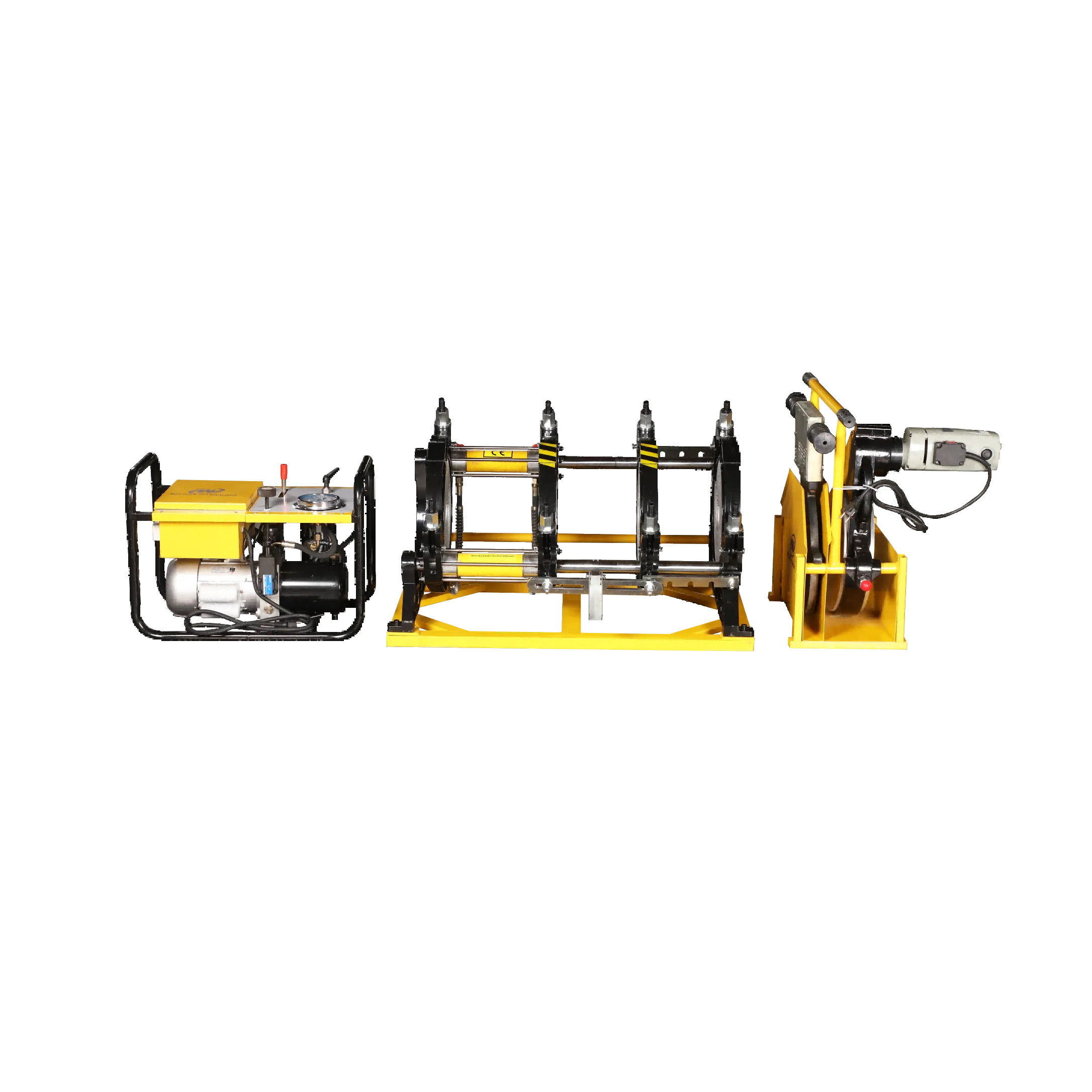
In pipeline construction and fluid transport infrastructure, the quality of every joint determines the long-term integrity of the entire system. A poorly fused joint is not simply a weak point — it is a liability that can lead to leaks, system failures, and costly field repairs. This is precisely where the HDPE thermofusion welding machine plays a decisive role, delivering controlled, repeatable, and structurally sound pipe joints that manual or adhesive-based methods simply cannot match.

Understanding how an HDPE thermofusion welding machine improves joint quality requires looking at the underlying physics of polyethylene bonding, the mechanical precision of modern fusion equipment, and the practical conditions found on real construction sites. Each of these dimensions contributes to why thermofusion has become the industry standard for joining HDPE pipe in water supply, gas distribution, industrial process lines, and municipal infrastructure projects worldwide.
The Thermofusion Principle and Why It Produces Superior Joints
Molecular-Level Bonding vs. Mechanical Fastening
The fundamental reason an HDPE thermofusion welding machine produces high-quality joints lies in the nature of thermofusion itself. Unlike mechanical couplings or solvent-based adhesives, thermofusion melts the pipe material directly at the joint interface, allowing polymer chains from both pipe ends to intermingle and re-solidify as a single continuous structure. The result is a joint that is chemically and structurally identical to the parent pipe material.
This molecular integration means there is no foreign material, no gasket, and no thread stress concentration at the joint. When the fusion zone cools and crystallizes properly, tensile strength across the weld can equal or exceed the base pipe specification. This is a critical advantage in pressure-rated systems where joint failure under surge loads or ground movement is unacceptable.
Mechanical joints, by contrast, rely on compressive seals and metallic inserts. Over time, differential thermal expansion, ground settlement, and vibration can compromise seal integrity. The HDPE thermofusion welding machine eliminates this vulnerability entirely by removing the joint as a separate mechanical component.
Heat Plate Technology and Controlled Melt Formation
Modern HDPE thermofusion welding machines use precision-controlled heating plates to bring both pipe faces to the correct melt temperature simultaneously and uniformly. The heating plate surface is maintained within a tightly regulated temperature range — typically between 200°C and 230°C for standard HDPE grades — ensuring that neither over-melting nor under-melting occurs at any point across the pipe face.
Uniform melt formation is critical because uneven heating creates weld zones with inconsistent molecular density. Areas that were insufficiently heated retain cold crystalline structures that resist bonding, while over-heated zones can degrade polymer chains and create brittle regions. The HDPE thermofusion welding machine controls both the temperature and the dwell time precisely, producing a consistent melt bead profile that is the visible indicator of a correctly formed joint.
Automatic hydraulic variants of the HDPE thermofusion welding machine go further by managing heating plate contact pressure programmatically, removing the variability that hand-operated equipment introduces when operator fatigue or inattention affects pressure consistency during the heating phase.
How Machine Precision Directly Controls Joint Integrity
Hydraulic Pressure Regulation During Fusion Phases
The butt fusion process managed by an HDPE thermofusion welding machine follows a defined sequence of pressure phases: initial bead-up, heat soak, plate removal, and fusion joining. Each phase requires a specific pressure value and duration that is determined by pipe diameter, wall thickness, and the SDR rating of the material being joined. Deviating from these parameters — even moderately — directly degrades joint quality.
Hydraulic HDPE thermofusion welding machines apply and release pressure through electronically controlled hydraulic circuits that maintain setpoint values regardless of operator input. This is fundamentally different from manual fusion equipment where the technician applies pressure by hand or with a mechanical screw, introducing variability that is impossible to fully eliminate across a long day of fieldwork.
When fusion pressure is too low during the joining phase, the melt zones do not achieve sufficient intermolecular contact, producing a weld with reduced peel strength and susceptibility to separation under bending loads. When fusion pressure is too high, material is extruded excessively from the weld zone, thinning the joint cross-section. An HDPE thermofusion welding machine with hydraulic pressure management eliminates both failure modes through consistent, parameter-driven control.
Alignment and Clamping Systems That Prevent Angular Defects
Joint quality is not only a function of heat and pressure — it also depends critically on pipe alignment. Misaligned pipe ends that are fused together produce joints with uneven stress distributions. Under operating pressure, these stress concentrations become crack initiation sites, particularly in systems subject to cyclic loading or thermal cycling.
An HDPE thermofusion welding machine incorporates precision clamping jaws and guided carriage systems that hold both pipe ends in true axial alignment throughout the entire fusion cycle. The carriage moves along a fixed rail, ensuring that the closing motion during the fusion phase is purely axial with no lateral shift or angular deviation.
For larger diameter pipes, this mechanical guidance is especially important because even small angular misalignments produce significant offset at the pipe wall, creating a visible 'step' in the weld that indicates uneven bead formation. The HDPE thermofusion welding machine's clamping geometry prevents this condition, producing flush, symmetrical weld beads that are the hallmark of a correctly aligned joint.
Process Repeatability and Its Role in Long-Term Quality Assurance
Consistent Output Across Operators and Shifts
One of the most significant ways an HDPE thermofusion welding machine improves joint quality is not in any single weld but across an entire project. Infrastructure projects involving HDPE pipelines may require hundreds or thousands of individual joints, completed by multiple operators working across different shifts and site conditions. Manual processes accumulate variability with every joint. Automated fusion equipment does not.
When the HDPE thermofusion welding machine stores and executes fusion parameters digitally, every operator working on the same pipe size and SDR uses exactly the same temperature, pressure profile, and timing sequence. The joint produced at shift start on day one is structurally equivalent to the joint produced at shift end on day twenty. This repeatability is the foundation of quality assurance in pipeline construction and is a requirement under many international pipeline standards.
Project owners and inspection authorities increasingly require fusion data logs as part of project documentation. Modern HDPE thermofusion welding machines generate traceable records for each joint, recording actual temperature, pressure, and time values that can be audited against specification requirements. This data trail supports both quality verification and warranty claims if post-installation issues arise.
Reduced Rework and Field Failure Rates
Rework is one of the most costly consequences of poor joint quality in pipeline construction. Cutting out a failed weld, re-preparing pipe ends, and re-fusing in a confined or backfilled trench environment consumes significant labor and materials while delaying project completion. The HDPE thermofusion welding machine reduces rework rates by eliminating the parameter variability that causes most preventable fusion defects.
Field failure data from water and gas distribution networks consistently shows that the majority of HDPE pipe failures occur at joints rather than along pipe runs. When those joints are produced by properly calibrated HDPE thermofusion welding machines following documented procedures, failure rates drop substantially. The economic case for investing in capable fusion equipment is therefore not purely about construction speed — it is about the cost of failures avoided over the pipeline's operational life.
Application Conditions That Amplify the Quality Advantage
Large Diameter and High-Pressure Systems
The quality improvements delivered by an HDPE thermofusion welding machine become most consequential in large-diameter and high-pressure applications. For pipes above 200mm in diameter or rated at SDR 11 and lower, the volume of material involved in each fusion cycle increases substantially. Achieving uniform heat penetration across a large pipe face requires precise temperature control and sufficient dwell time, both of which are managed automatically by a capable HDPE thermofusion welding machine.
In high-pressure gas distribution or industrial process piping, joint quality standards are governed by stringent codes. An HDPE thermofusion welding machine calibrated to meet these standards ensures that the fusion parameters applied to each joint are traceable and compliant. This is not achievable with manual equipment where parameter control is operator-dependent.
Challenging Site and Environmental Conditions
Construction sites rarely offer ideal fusion conditions. Temperature extremes, wind, dust, and pipe surface contamination all affect fusion quality if not properly managed. An HDPE thermofusion welding machine addresses environmental factors through features such as enclosed fusion zones, internal heating plate temperature compensation, and pipe face planing systems that produce clean, flat mating surfaces regardless of pipe storage conditions.
Cold weather is particularly problematic for HDPE fusion because the pipe material is stiffer at low temperatures and requires adjusted heating parameters to achieve proper melt depth. Advanced HDPE thermofusion welding machines can compensate for ambient temperature automatically, adjusting heating duration to ensure consistent melt quality even when working below 5°C. Without this compensation, joints fused in cold conditions using unadjusted manual procedures frequently exhibit cold fusion defects — inadequate intermolecular bonding that may not be visible externally but compromises long-term joint performance.
FAQ
What makes thermofusion joints stronger than mechanical HDPE pipe joints?
Thermofusion joins HDPE pipe by melting and intermixing the polymer at the pipe interface, creating a monolithic structure with no separate sealing components. When performed correctly by a calibrated HDPE thermofusion welding machine, the weld zone achieves tensile and pressure ratings equivalent to the parent pipe. Mechanical joints rely on compressive seals and inserts that can degrade over time, making them inherently less durable under cyclic or variable loading conditions.
How does an HDPE thermofusion welding machine ensure consistent joint quality across many welds?
Automatic hydraulic HDPE thermofusion welding machines store fusion parameters digitally and execute each fusion cycle according to those stored values, removing operator variability from temperature, pressure, and timing control. Many machines also log actual process data for each joint, enabling quality verification and traceability. This combination of parameter control and data recording is what makes large-scale pipeline projects achievable at consistent quality levels.
Can an HDPE thermofusion welding machine be used in cold or adverse weather conditions?
Yes, modern HDPE thermofusion welding machines include temperature compensation systems that adjust heating parameters based on ambient conditions. For very cold environments, protective enclosures and pre-heating protocols are also recommended. The key is that the machine manages these adjustments systematically rather than relying on operator judgment, which is particularly unreliable in fatiguing or uncomfortable field conditions.
What are the most common signs of a poor HDPE fusion joint and how does proper equipment prevent them?
Common indicators of poor fusion quality include asymmetric or insufficiently wide weld beads, visible cold rings inside the weld zone, angular misalignment visible at the joint, and low peel or bend test results. All of these defects trace back to deviations in heating temperature, dwell time, fusion pressure, or pipe alignment during the welding cycle. An HDPE thermofusion welding machine with hydraulic pressure control, precision alignment carriages, and calibrated heating plates prevents each of these failure modes by enforcing correct parameters throughout every fusion cycle.
Table of Contents
- The Thermofusion Principle and Why It Produces Superior Joints
- How Machine Precision Directly Controls Joint Integrity
- Process Repeatability and Its Role in Long-Term Quality Assurance
- Application Conditions That Amplify the Quality Advantage
-
FAQ
- What makes thermofusion joints stronger than mechanical HDPE pipe joints?
- How does an HDPE thermofusion welding machine ensure consistent joint quality across many welds?
- Can an HDPE thermofusion welding machine be used in cold or adverse weather conditions?
- What are the most common signs of a poor HDPE fusion joint and how does proper equipment prevent them?