
 EN
EN


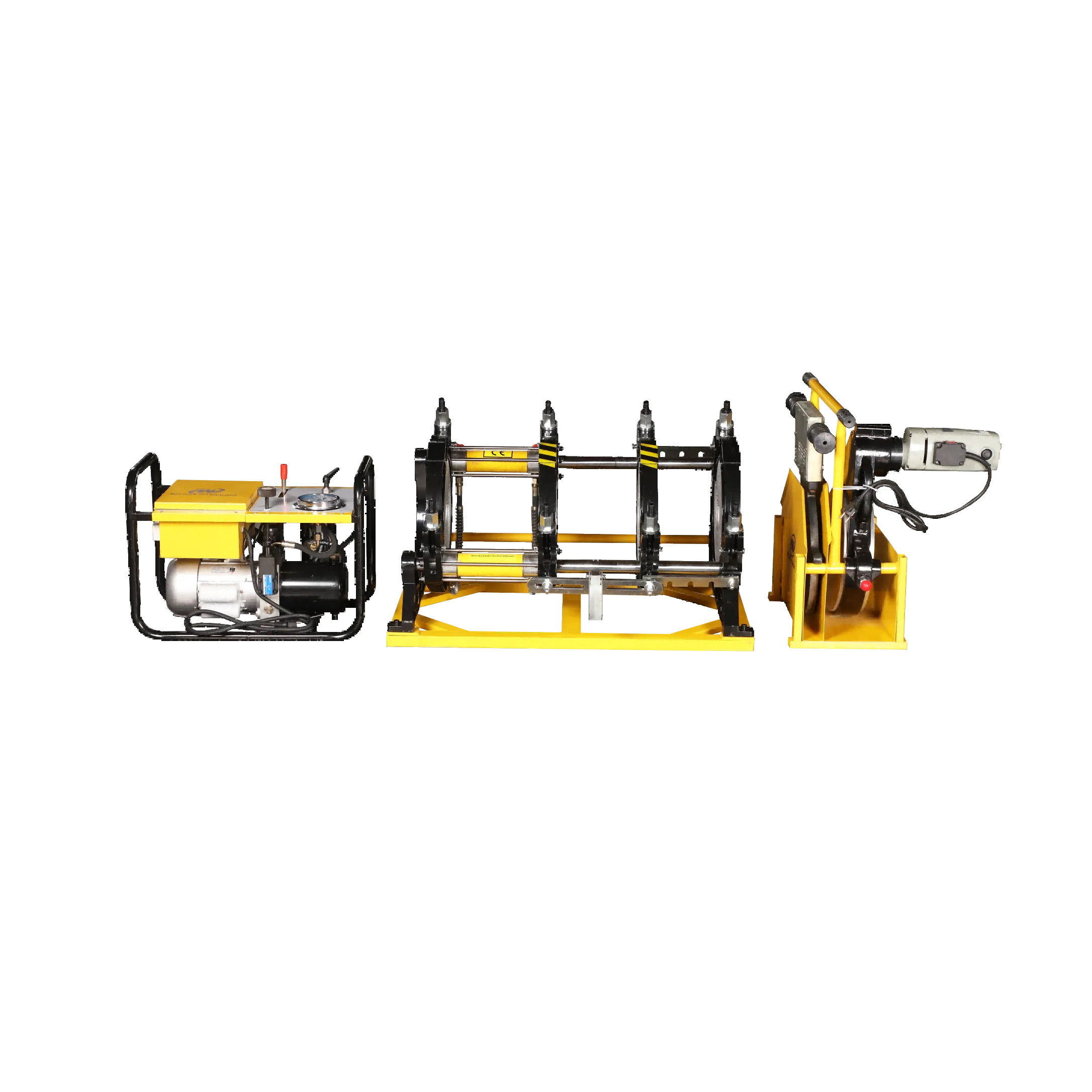
Water infrastructure projects demand reliability, longevity, and cost-effectiveness, making equipment selection a critical decision for contractors. The choice of joining technology directly impacts project timelines, long-term system integrity, and total cost of ownership. Among available methods, fusion welding has emerged as the preferred approach for high-density polyethylene pipe installation in municipal water distribution, irrigation networks, and industrial water transport systems. Understanding why contractors consistently select this technology reveals important insights into modern water infrastructure construction practices and the technical advantages that drive equipment purchasing decisions.
Contractors face mounting pressure to deliver water system projects that meet stringent quality standards while adhering to tight budgets and schedules. The fusion welding process creates monolithic, leak-free joints that eliminate the weak points traditionally associated with mechanical connections. This fundamental advantage addresses the primary concern in water system construction: preventing contamination and water loss through joint failures. The equipment that enables this superior joining method has become indispensable for contractors working on projects where system reliability cannot be compromised and where long-term performance directly affects their professional reputation and liability exposure.

Superior Joint Integrity Drives Equipment Selection
Molecular Bonding Creates Leak-Proof Connections
The fusion process employed by HDPE fusion equipment creates joints through molecular interdiffusion, fundamentally different from mechanical coupling systems. When properly executed, the heated pipe ends melt and fuse together at the molecular level, creating a homogeneous connection that possesses the same strength characteristics as the parent pipe material. This molecular bonding eliminates the gaskets, threads, and mechanical interfaces that represent potential failure points in traditional joining methods. For contractors, this translates to water systems with dramatically reduced leak rates and virtually eliminated joint-related maintenance calls.
Water utility operators report that fusion-welded systems experience leak rates as low as one-tenth that of systems using mechanical joints. This performance difference stems directly from the absence of separate joining components that can degrade over time. The fusion joint cannot separate, corrode at dissimilar material interfaces, or experience gasket compression set failures. Contractors recognize that specifying HDPE fusion equipment protects them from callback liability and enhances their competitive position when bidding projects with stringent performance guarantees or warranty requirements.
Elimination of Leak Points Reduces Long-Term Liability
Each mechanical connection in a water distribution system represents a potential leak point that may develop years after installation. Contractors working on municipal water projects understand that their reputation depends on long-term system performance, not just initial installation quality. By utilizing HDPE fusion equipment to create leak-proof joints, contractors effectively eliminate thousands of potential failure points in large-scale water networks. This risk reduction has tangible business value, as warranty claims and remediation work can consume profit margins and damage client relationships.
The liability implications extend beyond immediate project completion. Water systems installed today may remain in service for fifty years or longer, and contractors increasingly face extended warranty periods. Fusion-welded joints provide assurance that the joining method itself will not become a source of system degradation. This long-term reliability consideration heavily influences equipment purchasing decisions, particularly for contractors who specialize in water infrastructure and depend on their track record for continued business development in this specialized market segment.
Economic Performance Across Project Lifecycles
Reduced Installation Time Lowers Labor Costs
The operational efficiency of modern HDPE fusion equipment directly impacts project profitability through reduced installation time. Fusion welding cycles typically range from fifteen to thirty minutes depending on pipe diameter, creating permanent joints without the preparation, alignment, and bolt-tightening procedures required for mechanical connections. For contractors managing labor-intensive water main installation projects, this time savings multiplies across hundreds or thousands of joints, significantly reducing overall installation duration and associated labor costs.
Contractors calculate that fusion welding can reduce joining time by forty to sixty percent compared to mechanical methods when accounting for total process time including preparation, execution, and quality verification. This efficiency advantage becomes particularly pronounced on large-diameter pipe installations where mechanical joint assembly requires substantial physical effort and extended assembly time. The capital investment in HDPE fusion equipment typically amortizes within the first several projects through labor savings alone, making the technology economically attractive even for contractors who previously relied on lower-cost joining alternatives.
Minimal Maintenance Requirements Improve Equipment ROI
The return on investment for HDPE fusion equipment extends beyond project labor savings to include remarkably low maintenance requirements. Fusion welders feature relatively simple mechanical systems compared to complex mechanical joining tools, with primary maintenance limited to heating element inspection, alignment system calibration, and basic hydraulic system service. Contractors report annual maintenance costs representing only two to four percent of equipment acquisition cost, substantially lower than the maintenance burden associated with threading equipment, mechanical joint installation tools, or fusion methods requiring complex electronic controls.
Equipment reliability directly affects contractor profitability by minimizing costly project delays. Modern HDPE fusion equipment demonstrates exceptional field reliability, with properly maintained units operating for decades with minimal unscheduled downtime. This reliability stems from robust mechanical design and the absence of complex electronic components vulnerable to jobsite conditions. Contractors value equipment that performs consistently across diverse environmental conditions without requiring specialized technical support, allowing them to confidently schedule projects without concern for equipment-related delays that could trigger penalty clauses or erode client confidence.
Technical Capabilities Meeting Water System Requirements
Pressure Rating Preservation Throughout Joint Zones
Water distribution systems operate under continuous internal pressure, with transmission mains frequently designed for working pressures exceeding one hundred fifty pounds per square inch and surge pressures substantially higher. The fusion joining process preserves the full pressure rating of the pipe material throughout the joint zone, a critical performance characteristic that mechanical joints cannot reliably match. When contractors utilize HDPE fusion equipment to create homogeneous joints, the resulting connection can withstand the same pressure as the pipe itself, eliminating concerns about joint-specific pressure derating that complicates system hydraulic design.
This pressure performance consistency simplifies contractor responsibilities during system commissioning and pressure testing. Fusion-welded systems can be tested to full design pressure without concern for joint-specific limitations or the need to document and track joints with reduced pressure ratings. For contractors, this eliminates complex record-keeping requirements and reduces the risk of specification non-compliance that could delay project acceptance or trigger penalty assessments. The ability to deliver systems with uniform pressure capabilities throughout enhances contractor competitiveness on projects with demanding performance specifications.
Environmental Stress Resistance Ensures System Longevity
Water systems experience complex environmental stresses including soil movement, thermal cycling, and chemical exposure from surrounding soil conditions. The monolithic nature of fusion-welded joints ensures that environmental stress resistance remains constant throughout the pipeline system rather than concentrating at mechanically joined interfaces. Contractors recognize that HDPE fusion equipment enables them to deliver systems with inherent resistance to stress cracking, a degradation mechanism that particularly affects joint zones in systems using dissimilar materials or mechanical clamping forces.
Field performance data demonstrates that fusion-welded water systems maintain structural integrity under conditions that cause premature failure in mechanically joined alternatives. Ground settlement, seismic activity, and freeze-thaw cycling create differential movement that mechanical joints must accommodate through gasket compression or articulation mechanisms that may eventually reach their limits. Fusion joints, being integral with the pipe material, distribute these stresses across larger pipe sections rather than concentrating them at discrete connection points. This stress distribution characteristic provides contractors with confidence that installed systems will perform reliably regardless of ground conditions encountered after installation.
Operational Advantages in Field Conditions
Weather Independence Maintains Project Schedules
Construction schedules face constant pressure from weather-related delays, particularly in water infrastructure projects that often extend across multiple seasons. HDPE fusion equipment operates effectively across a wide temperature range, allowing contractors to maintain productivity during conditions that halt other joining methods. While extreme cold requires preheating provisions and high temperatures necessitate shading of prepared pipe ends, fusion welding remains viable in conditions where adhesive curing, gasket pliability, or threading compound performance become unreliable.
Contractors working in northern climates particularly value the cold-weather capability of fusion welding technology. While mechanical joints may require heated enclosures to prevent gasket stiffening or lubricant freezing, HDPE fusion equipment with appropriate cold-weather protocols enables continuous operation in subfreezing temperatures. This weather independence helps contractors avoid the costly schedule compression that occurs when joining operations must be suspended during cold periods, protecting project margins and client relationships. The ability to work through diverse weather conditions represents a significant competitive advantage for contractors operating in regions with challenging seasonal climates.
Reduced Jobsite Space Requirements Ease Logistics
Urban water system projects often proceed within severely constrained work areas where space for material staging, equipment positioning, and worker movement comes at a premium. HDPE fusion equipment requires relatively compact work areas compared to the extensive laydown space needed for mechanical joint component staging, threading operations, or alternative joining methods. A typical fusion welding setup occupies linear space of only ten to fifteen feet beyond the pipe ends being joined, allowing contractors to work efficiently in tight urban corridors, utility easements, or congested industrial sites.
This space efficiency translates directly to reduced site mobilization costs and enhanced safety through less congested work areas. Contractors can position HDPE fusion equipment within traffic control zones without requiring lane closures or easement expansions that trigger additional permitting requirements and associated costs. The compact footprint also facilitates joining operations in constrained locations such as existing utility corridors where multiple infrastructure systems compete for limited space. For contractors specializing in urban water infrastructure rehabilitation, this operational advantage often determines project feasibility and profitability.
Quality Assurance and Regulatory Compliance
Documented Process Control Meets Specification Requirements
Modern water system specifications increasingly require documented quality assurance for all joints, creating compliance obligations that influence contractor equipment selection. HDPE fusion equipment with integrated data logging capabilities automatically records critical process parameters including temperature, pressure, heating time, and cooling time for each joint. This documentation provides contractors with objective evidence of specification compliance without the labor-intensive manual recording required for other joining methods. The resulting quality records satisfy owner requirements, regulatory agency oversight, and contractor quality management system documentation needs.
The liability protection afforded by comprehensive process documentation has become increasingly important as water system owners implement more rigorous quality oversight programs. Contractors using advanced HDPE fusion equipment can provide complete fusion records demonstrating that every joint was executed within specified parameters, protecting against future claims of improper installation. This documentation capability proves particularly valuable on projects subject to third-party inspection or those where system performance bonds extend for multiple years after installation. The integration of quality documentation within the fusion equipment itself eliminates the potential for human documentation errors that could create compliance gaps.
Operator Certification Programs Ensure Consistent Results
The reliability of fusion-welded water systems depends significantly on operator skill and adherence to established procedures. Comprehensive operator certification programs have emerged as an essential component of quality assurance, providing contractors with trained personnel capable of consistently producing specification-compliant joints. Equipment manufacturers and industry organizations offer standardized training and certification that contractors rely on to demonstrate workforce competency to project owners and regulatory agencies. This formalized training infrastructure gives contractors confidence that their investment in HDPE fusion equipment will deliver consistent results across diverse projects and personnel.
Contractors increasingly view operator certification as a competitive differentiator that enhances their qualification for premium projects. Many municipal water authorities and industrial facility owners now require certified fusion operators as a precondition for contractor prequalification, making workforce training an essential business investment. The existence of standardized certification programs specific to fusion welding technology provides contractors with a clear pathway to workforce development that supports their specialization in water infrastructure construction. This training infrastructure represents an often-overlooked advantage of fusion technology that extends beyond equipment capabilities to encompass the broader professional ecosystem supporting quality installation practices.
FAQ
What diameter range can HDPE fusion equipment accommodate for water system projects?
Most HDPE fusion equipment suitable for water distribution systems accommodates pipe diameters from two inches through sixty-three inches, with specialized machines available for larger transmission mains. Contractors typically maintain multiple equipment sizes to efficiently handle the diameter range encountered in their project portfolio. Small-diameter equipment serves service connections and small distribution mains, while larger capacity machines address trunk mains and transmission pipelines. The modular nature of fusion equipment allows contractors to scale their equipment inventory based on their typical project profile without requiring completely different joining technologies across diameter ranges.
How does fusion equipment performance compare in potable water versus wastewater applications?
HDPE fusion equipment functions identically for potable water and wastewater applications, as the fusion process creates homogeneous joints regardless of eventual service fluid. The key distinction lies in material selection rather than joining equipment, with contractors using pipe compounds rated for specific service conditions. Fusion equipment quality requirements actually increase for potable water systems due to stricter quality documentation and testing protocols mandated by drinking water regulations. Contractors working on potable water projects typically invest in fusion equipment with enhanced process control and documentation capabilities to satisfy these more demanding quality assurance requirements.
What training investment is required before contractors can effectively use fusion welding technology?
Initial operator certification typically requires forty to eighty hours of combined classroom and hands-on training, with duration depending on pipe diameter range and specific equipment models. Contractors should budget approximately three thousand to six thousand dollars per operator for comprehensive certification including materials and testing. This training investment pays returns through reduced joint failures, faster installation times, and enhanced qualification for projects requiring certified operators. Most contractors find that operator proficiency continues improving through the first fifty to one hundred field joints after initial certification, suggesting that training should be completed well before critical project deadlines.
Can fusion equipment deliver reliable results in challenging jobsite conditions such as high humidity or dusty environments?
Modern HDPE fusion equipment incorporates design features that maintain performance reliability across typical construction environments including moderate dust and humidity. Contractors should implement jobsite protocols protecting heating elements from direct contamination and ensuring prepared pipe ends remain clean during the fusion cycle. High-particulate environments such as dusty agricultural sites or industrial facilities may require temporary enclosures around the fusion area to prevent contamination of heated surfaces. Humidity affects cooling time rather than joint quality, requiring contractors to extend cooling periods in high-humidity conditions to ensure adequate joint strength development before removing external clamps and applying stress to newly formed joints.
Table of Contents
- Superior Joint Integrity Drives Equipment Selection
- Economic Performance Across Project Lifecycles
- Technical Capabilities Meeting Water System Requirements
- Operational Advantages in Field Conditions
- Quality Assurance and Regulatory Compliance
-
FAQ
- What diameter range can HDPE fusion equipment accommodate for water system projects?
- How does fusion equipment performance compare in potable water versus wastewater applications?
- What training investment is required before contractors can effectively use fusion welding technology?
- Can fusion equipment deliver reliable results in challenging jobsite conditions such as high humidity or dusty environments?