
 EN
EN


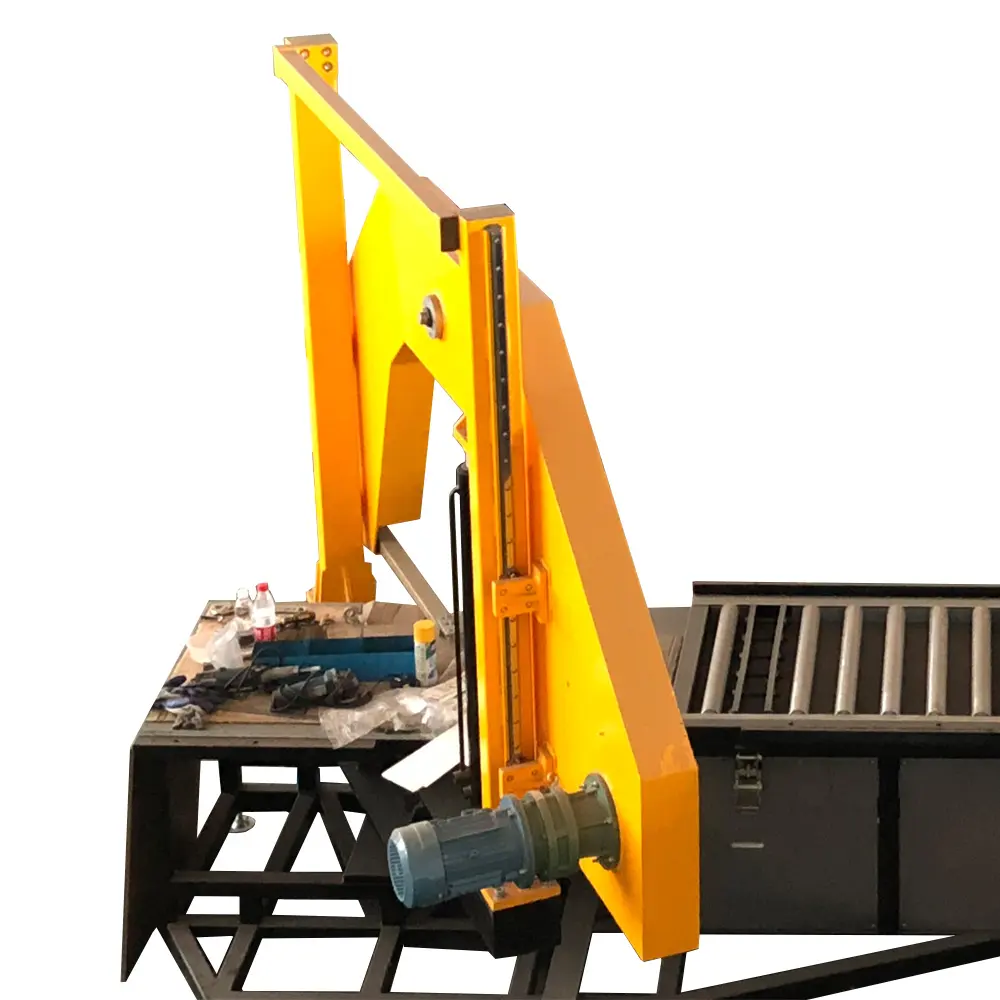
In plastic fabrication and industrial processing environments, precision is not a luxury — it is a baseline requirement. A plastic band cutting saw is one of the most reliable tools available when consistent, clean, and accurate cuts are the goal. Whether you are working with HDPE strips, polyethylene bands, or other thermoplastic materials, the quality of each cut directly affects the integrity of the downstream product, the efficiency of the workflow, and the safety of the operator. Understanding how this tool achieves accuracy — and what conditions support or undermine it — is essential knowledge for anyone involved in plastic processing operations.
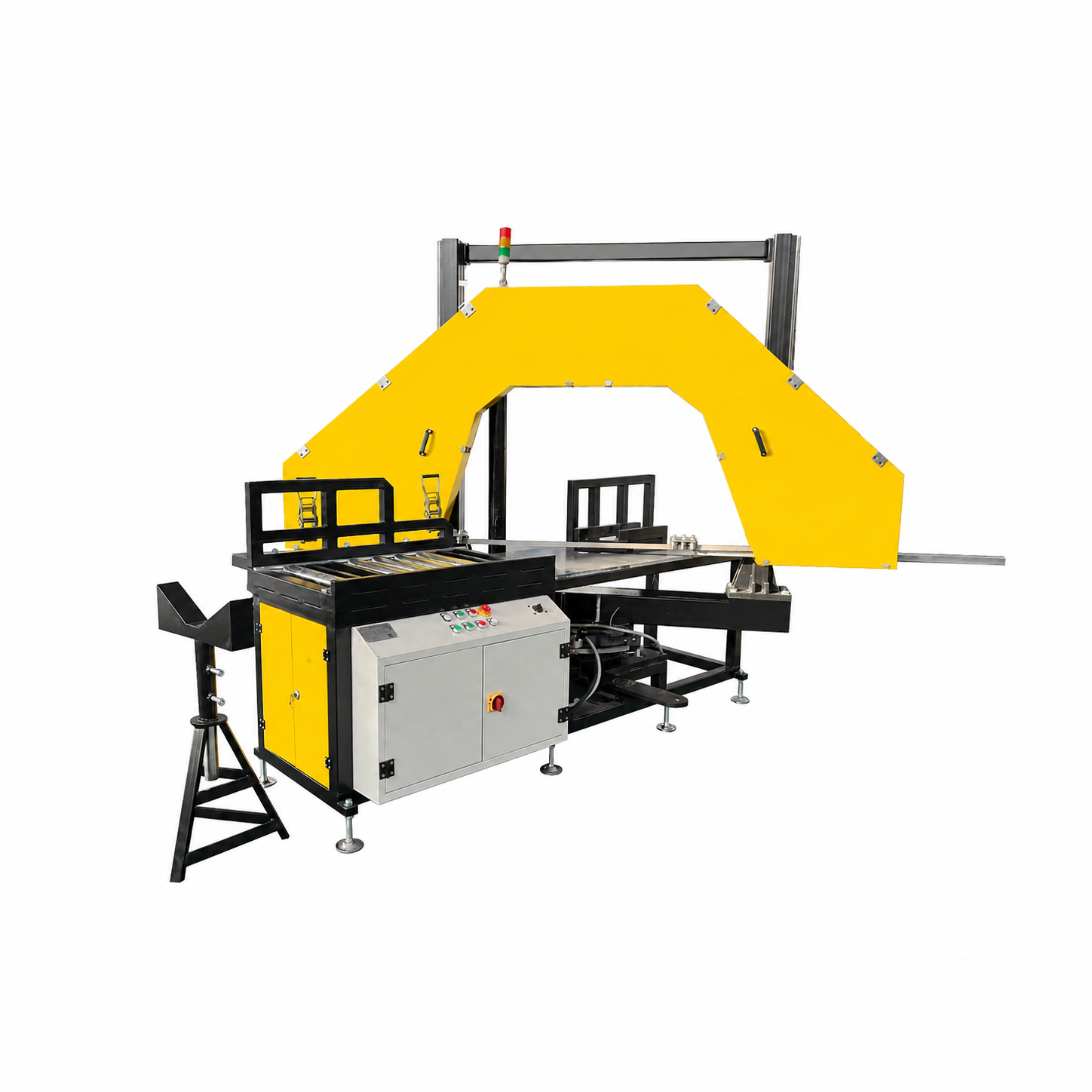
The design and operating principles of a plastic band cutting saw are specifically engineered to address the unique challenges that plastics present during cutting. Unlike metals or wood, thermoplastic materials can deform under heat, flex under blade pressure, or produce inconsistent edges if the cutting mechanism is not properly calibrated. This article explores the key mechanical, operational, and material-related factors that allow a plastic band cutting saw to deliver accurate results consistently, and what operators and procurement decision-makers should understand before integrating this equipment into a production line.
The Mechanical Design Principles Behind Cutting Accuracy
Blade Tension and Tracking Stability
One of the most fundamental contributors to accurate cutting in a plastic band cutting saw is proper blade tension. A band saw blade that is too loose will wander during the cut, creating uneven edges and dimensional inconsistencies. Conversely, a blade under excessive tension is prone to fatigue and breakage. The optimal tension maintains a straight, rigid cutting path without overstressing the blade material.
Blade tracking — the alignment of the blade on the drive and idler wheels — is equally critical. A well-designed plastic band cutting saw includes adjustable tracking mechanisms that allow operators to fine-tune blade position before and during operation. When the blade runs centered on the wheel crown, lateral drift is minimized, and the cut follows the intended line with high repeatability.
Industrial-grade plastic band cutting saw models typically incorporate tensioning gauges and locking systems that preserve settings across multiple cutting sessions. This reduces setup variability and ensures that each workpiece is processed under consistent mechanical conditions, which is a direct driver of cutting accuracy.
Guide Systems and Workpiece Stability
Blade guides — whether roller-type or block-type — prevent lateral deflection as the blade passes through the material. In a plastic band cutting saw, these guides are positioned close to both the upper and lower faces of the workpiece to minimize the unsupported blade span. The shorter the unsupported span, the less the blade can flex, and the more precise the resulting cut.
Workpiece stability is the other side of this equation. A plastic band cutting saw equipped with a sturdy, flat table surface and a reliable fence system allows the operator to feed material at a consistent rate and angle. Vibration or lateral movement of the workpiece during cutting introduces error that no blade adjustment can correct after the fact.
Some plastic band cutting saw configurations also include clamp systems or hold-down mechanisms that secure the material against the table surface. This is particularly important when cutting narrow or thin plastic bands where the material's own flexibility could cause it to shift during the cut.
Blade Selection and Its Impact on Cut Quality
Tooth Geometry for Plastic Materials
Not every band saw blade is suitable for cutting plastic. A plastic band cutting saw relies on blades with tooth geometries that are specifically matched to thermoplastic behavior. Plastics tend to melt and re-bond if the blade generates too much frictional heat, so tooth designs that clear chips efficiently and minimize heat buildup are preferred.
Skip-tooth and hook-tooth configurations are commonly used in plastic band cutting saw applications because their wider gullets allow plastic chips and swarf to evacuate the cut zone before they can re-weld to the workpiece edge. This directly affects edge quality and dimensional accuracy, as re-fused material would otherwise distort the cut line.
Blade pitch — the number of teeth per inch — must also be matched to the thickness of the plastic band being cut. Too coarse a pitch on thin material leads to grabbing and vibration, while too fine a pitch on thick stock creates heat accumulation. Selecting the correct blade for the specific plastic band cutting saw application is a decision that directly determines whether the resulting cuts will meet dimensional tolerances.
Blade Speed and Feed Rate Coordination
Accurate cutting with a plastic band cutting saw is not just about the blade itself — it is about the relationship between blade speed and material feed rate. Blade speed, measured in surface feet per minute or meters per second, determines how quickly each tooth passes through the material. Feed rate determines how much material each tooth must remove per pass.
When these two variables are properly coordinated for the specific plastic material and band thickness, the plastic band cutting saw produces a consistent kerf with minimal edge roughness. If the feed rate is too aggressive relative to blade speed, the blade deflects and the cut drifts. If the feed rate is too slow, heat accumulates and the plastic melts rather than cuts cleanly.
Operators working with a plastic band cutting saw in high-volume environments often develop material-specific feed rate protocols that are documented and applied as standard operating procedures. This systematic approach removes human variability from the equation and is one of the most practical ways to ensure accuracy across large production runs.
Operational Practices That Support Precise Outcomes
Setup Verification and Calibration Routines
Even a well-designed plastic band cutting saw will produce inaccurate results if the setup is not verified before cutting begins. Experienced operators check blade squareness to the table, fence parallelism to the blade, and guide bearing clearance as part of a pre-operation routine. These checks take only a few minutes but can prevent entire batches of material from being cut out of specification.
Calibration is particularly important when a plastic band cutting saw is used for angle cuts or compound cuts. The miter gauge and tilt table — where applicable — must be set to verified angles using precision instruments rather than relying solely on the machine's built-in scale markings, which can drift over time or after maintenance operations.
Documenting calibration results and establishing a schedule for periodic verification allows operations managers to identify when a plastic band cutting saw is drifting out of tolerance before it begins producing defective parts. This proactive approach is a hallmark of quality-controlled fabrication environments.
Operator Technique and Material Handling
Even with excellent equipment, the technique of the operator influences cut accuracy. Feeding material through a plastic band cutting saw at a steady, controlled pace — without pushing, pulling, or pausing mid-cut — is essential for a consistent kerf and smooth edge. Irregular feed pressure introduces variation in the load on the blade, causing it to deflect momentarily and leave an uneven cut surface.
Proper material support before and after the cut zone is another practical element. Long plastic bands, in particular, tend to sag or flex if not supported adequately on both the infeed and outfeed sides of the plastic band cutting saw. This sagging changes the effective cutting angle and can cause the blade to bind or drift as the unsupported weight shifts during the cut.
Training and standardized operator procedures are therefore not peripheral concerns — they are central to extracting the full accuracy potential that a well-configured plastic band cutting saw is capable of delivering.
Material Properties and Their Influence on Cutting Precision
Thermal Sensitivity of Plastic Bands
Plastics are thermally sensitive in ways that metals are not, and this characteristic directly affects how a plastic band cutting saw must be configured to achieve accuracy. Materials like HDPE, UHMW, and polypropylene have low thermal conductivity, meaning heat generated at the blade-workpiece interface does not dissipate quickly. This localized heat can cause the cut edge to melt slightly, creating a raised bead or rough surface that deviates from the intended dimension.
A plastic band cutting saw designed for thermoplastic materials typically runs at lower blade speeds than those used for wood, and may incorporate cooling strategies such as air jets directed at the cut zone. These design features are specifically aimed at managing the thermal sensitivity of plastic and preserving dimensional accuracy at the cut edge.
Understanding the specific thermal properties of the plastic band material being cut allows the operator to fine-tune the plastic band cutting saw settings for that material's behavior, rather than applying generic parameters that may not be appropriate.
Dimensional Consistency of the Incoming Material
The accuracy of the output from a plastic band cutting saw is also influenced by the consistency of the incoming material. If the plastic bands themselves vary in width, thickness, or straightness, the cutting operation must compensate for those variations, which places additional demands on the fence system and blade guide setup.
In controlled manufacturing environments, incoming plastic band stock is inspected and qualified before being processed through the plastic band cutting saw. This upstream quality step ensures that the machine is always working within its designed operating parameters, which in turn supports the consistent, accurate output that downstream processes require.
When incoming material quality is variable, experienced operators may adjust the plastic band cutting saw setup between batches or use adaptive feed techniques to compensate. However, consistent input remains the most reliable foundation for consistent output.
FAQ
What makes a plastic band cutting saw more accurate than a standard circular saw for plastic materials?
A plastic band cutting saw uses a continuous loop blade that applies consistent, directional cutting force with minimal vibration. This design reduces the tendency for plastic to crack, chip, or melt at the cut edge, which circular saw blades — rotating at higher speeds and generating more localized heat — are more prone to causing. The band saw's guided blade path and adjustable fence system also support straighter, more repeatable cuts than handheld or table-mounted circular saws typically allow.
How often should the blade on a plastic band cutting saw be replaced to maintain accuracy?
Blade replacement frequency depends on the volume of material being cut, the hardness and abrasiveness of the plastic, and the cutting parameters being used. A general indicator of blade wear is increasing roughness at the cut edge or a tendency for the blade to wander despite correct tension and guide settings. In production environments, many operations schedule blade inspection at defined intervals — such as every shift or every set number of cutting hours — rather than waiting for visible signs of degradation. Proactive replacement is more cost-effective than allowing a worn blade to produce out-of-specification parts.
Can a plastic band cutting saw handle angle cuts with the same accuracy as straight cuts?
Yes, a plastic band cutting saw can perform accurate angle cuts when the miter gauge or tilting table is properly calibrated and verified against a precision reference. The key requirement is that the angular setting is confirmed with an independent measurement tool before the cut, since built-in scale markings on the machine may not reflect the true angle after extended use or maintenance. Securing the workpiece firmly during angle cuts is also more critical than for straight cuts, as the blade force vector has a lateral component that can shift unsecured material.
What role does cooling play in maintaining accuracy when using a plastic band cutting saw?
Cooling — whether through compressed air, misting systems, or simply appropriate blade speed selection — directly affects cut edge quality and dimensional accuracy in a plastic band cutting saw. Without adequate heat management, the thermoplastic material at the cut edge can soften and re-solidify in a deformed shape, creating a bead or ridge that represents a dimensional deviation from the intended cut. Cooling keeps the plastic in its solid state throughout the cut, preserving edge geometry and ensuring that the finished dimension matches the intended specification.
Table of Contents
- The Mechanical Design Principles Behind Cutting Accuracy
- Blade Selection and Its Impact on Cut Quality
- Operational Practices That Support Precise Outcomes
- Material Properties and Their Influence on Cutting Precision
-
FAQ
- What makes a plastic band cutting saw more accurate than a standard circular saw for plastic materials?
- How often should the blade on a plastic band cutting saw be replaced to maintain accuracy?
- Can a plastic band cutting saw handle angle cuts with the same accuracy as straight cuts?
- What role does cooling play in maintaining accuracy when using a plastic band cutting saw?